Nevada’s biggest cities are near its edges, and as a consequence our city-dwellers don’t have as much connection with small town Nevada as they might otherwise, and so they miss out on a big part of the pleasure of living here. In fact, due to the energetic efforts of Nevada’s tourism organizations there are probably more Chinese tourists who have visited Elko for the fun of it than residents of Clark County.
But everywhere and always there are people who break the mold, and there are more urban dwellers than ever wondering what’s on the other side of the horizon. What they do to scratch that itch is find an out-of-town event — like the Eureka Independence Day celebration profiled below — as a happy-making destinations for family excursions.
And then they go there. They have as good a time as they can — which is generally a pretty good time — and all go home with lifelong memories . . . like this one:
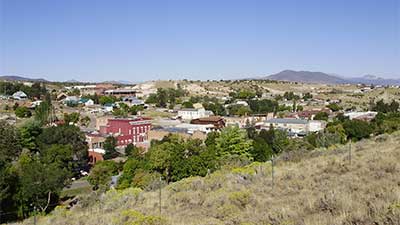

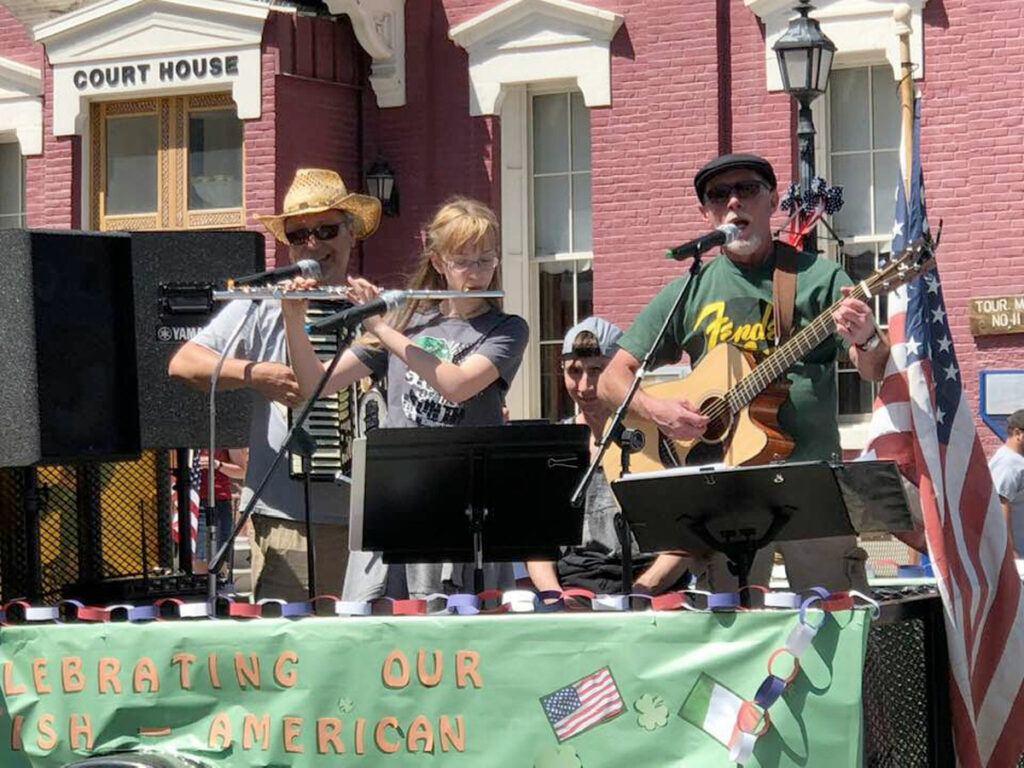
We emerged unexpectedly from the wilderness at Eureka, on US 50 toward the center of the state. It was early morning, and even though the sun was already warming the bright blue sky, the town was still asleep. We drove around for a bit, gawking at the sights to be seen in the old city. As we did, we began to see people moving around, and back downtown again there were pickup trucks arriving, more people appearing . . . and eventually . . . when they began hanging up red white and blue bunting . . . it dawned on us . . . that we had arrived on the 4th of July.

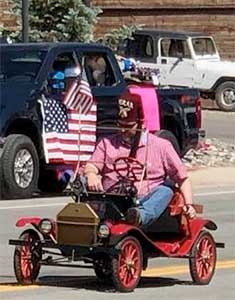
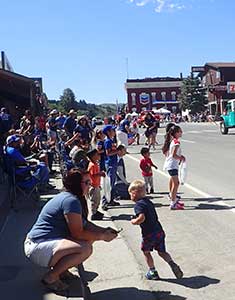
The procession behind him was a long block in length, 12 or 15 ‘floats’ followed by half all the kids in town riding bicycles with red, white and blue ribbons circling in their spokes.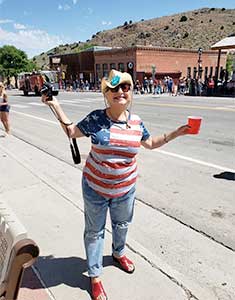

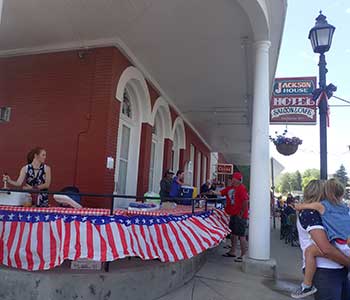
The parade went from the bottom of town to the top, and then it turned around and paraded down again. After that was a series of come-one come-all activities and competitions in the street that included Women’s Nail-Pounding among the competitions. Riveting!

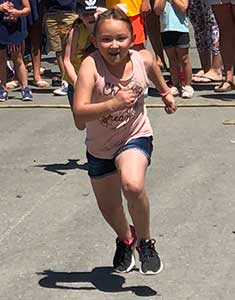
We gathered around the starting line and took off our shoes which went into a burlap sack and mixed up.
A grownup took the sackful of shoes down to the other end of the long block in front of the Owl Club and put it in the middle of the street. At the starting line, we were told that the first person who raced to the bag of shoes, put his shoes on, and made it back to the finish line would win two Silver Dollars.
There were bigger boys in my group and a couple of them were pretty fast. I was never very fast and I didn’t feel very good about my chances.
But then it was “On your mark, get set — Go!” and we took off. By the time I got to the bag there were already three kids tearing through the shoes scattered on the ground.
I had bright red shoes and was able to grab them the instant I joined the scrum. While the other kids were struggling to find their cowboy boots and put them on, I slipped on my red tennies and dashed back to the finish line. I wasn’t the fasted kid in the race, but I crossed the finish line way out in front of the pack and won those Silver Dollars. I remember how hot it was that day as we strode into the Owl Club to buy an ice cold Dr. Pepper with my prize.
I have not been able to make it back to Eureka over the 4th of July since then, but Dad and I talk about the heroics every 4th of July since. He was there this year to attend the parade and relive my happy day.
Silver dollars for prize money and free ice cream for all the kids! Americana, pure and home-made. It was a day to remember . . . and that’s the whole point.
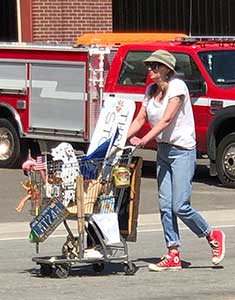
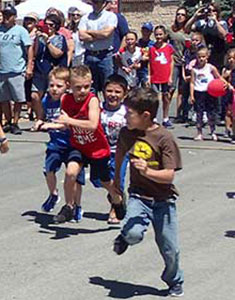
Clearly, it was an unforgettable experience for us and more out-of-towners than ever came to Eureka this year to experience something like it. The 2019 parade was five times the size it was in 1970 — it started with 13 fire trucks! — and the street events afterward went on for more than two hours.
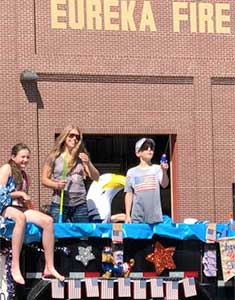
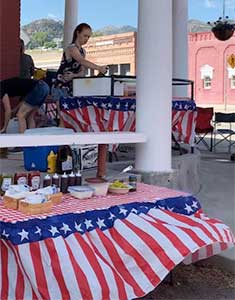
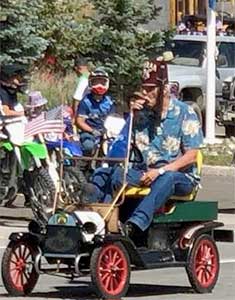
In most months of the year there is something good going on not too far beyond the mountains, and more people making family road trips to get a taste of them.
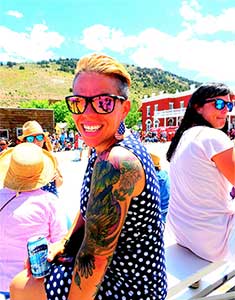
But you don’t have to wait for a special event to explore Nevada. On a recent Saturday Robin and I made the drive to Yerington just for the fun of it. As I have mentioned elsewhere, visiting Yerington is like taking a Sunday drive to a home town you never had.
We came in from the north, through Wabuska and down the cottonwood-bowered two-lane highway 95A, with family farms spread out across the valley on both sides (including the startlingly magnificent and mysterious Masini Ranch on the west side of the road).
Yerington boasts the largest trap shooting range in central Nevada and the golf course is open all year, but one of the little city’s principal attractions is subtler: the unhurried, friendly way people go about their business here. I have watched a man spend ten minutes walking down a single block, amiably passing the time of day with four different neighbors.
The downtown Pioneer Crossing (previously Casino West) is a traditional small town casino, with food, lodging and a bowling alley all available. When we parked across the street and I was taking the dogs out of the car, a woman hurried over from the casino carrying a broom.
“Here, let me get that glass up before you bring the dogs out,” she said, and swept up the smashed bottles she’d seen from across the street.
The simple, straightforward generosity of her good deed has made Yerington seem rather heavenly to me.
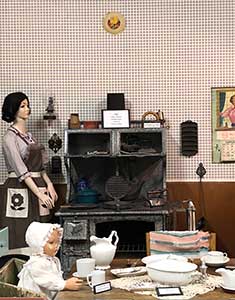
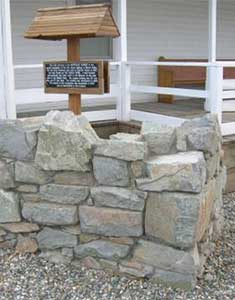
The Lyon County Museum reiforces that impression. It not only provides a full experience of the Museum and its holdings — including three schoolhouses and a gas station — but also a friendly and knowledgeable local volunteer as your guide. Tom and Mike were our hosts and led us through the extensive and meticulously curated and invitingly presented holdings, sharing the stories that go along with the artifacts. As knowledgeable locals they can also tell you about the other attractions and resources of Yerington and its surrounds — the Yerington Theatre for the Arts perhaps, local treasures like the Bakery Gallery, and what’s good for lunch. It’s a particularly endearing service for visitors. Three glimpses —

Speaking of lunch, Yerington’s hidden culinary treasure is tucked in the back of the Supermercado Chapala, across Main Street from the Court House. Here you will find a meat counter as splendid as a jewelry case and a 6-table café where the burritos are made as big as footballs from treasured recipes, truly magnifico (closed Sundays and Mondays).
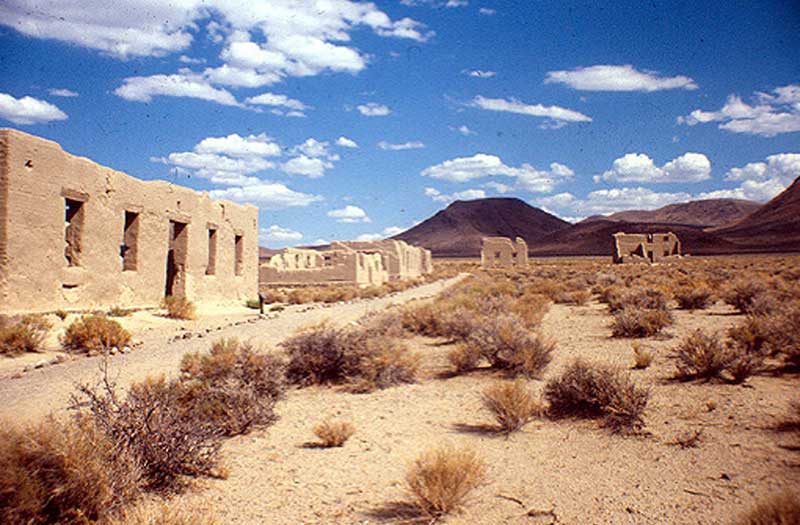
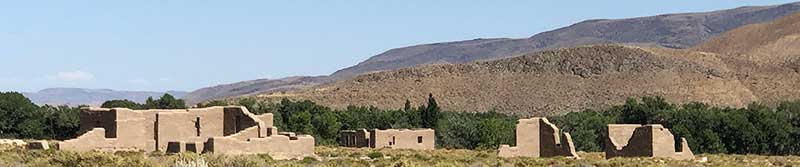
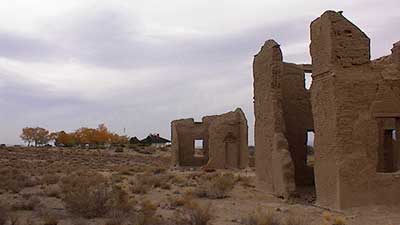
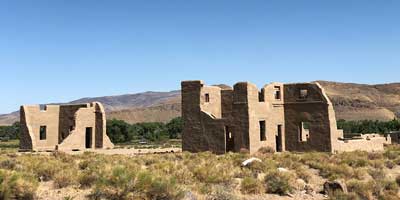
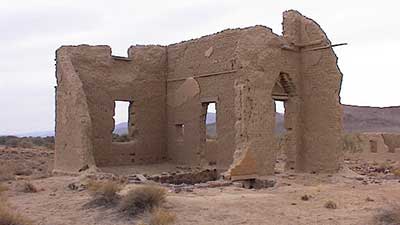
We left for home in midafternoon so we’d have time for a visit to Fort Churchill State Historic Park just west of US 95A a dozen miles south of Silver Springs. It was a hot July afternoon, providing a hint of what the soldiers experienced here. The small Visitor Center in the former Headquarters provides an overview of the Fort and its history in the aftermath of the short-lived Paiute War of 1860. The following is adapted from The Complete Nevada Traveler —

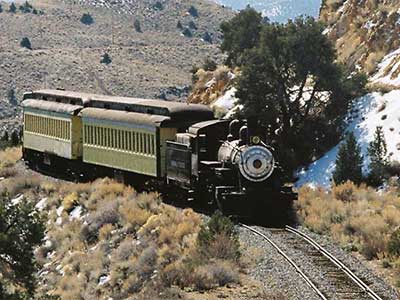
 Daily Train Rides from $12 for Adults & $6 for Kids! |




Most of the military activity at Fort Churchill consisted of patrolling the Overland Stage route, at this time the only transcontinental stagecoach route since the more southerly Butterfield route was closed by the war. Sometimes they chased after small bands of Indians who made occasional forays against isolated settlers.
It was inglorious, unglamorous, boring, and largely unproductive duty, and after a hot sweaty day of soldiering, the lights of Virginia City must have been alluring, glittering on the mountainside to the north like a faraway galaxy.
Of the 1,200 Nevadans in federal service during the Civil War, nearly 400 deserted. One of them was apprehended as he was negotiating the sale of his troop’s horses to the stagecoach line. Nine Nevadans were killed or died in service, and virtually all of the survivors had been mustered out of the Army by Christmas 1865.
By 1867 the adobe buildings of the fort housed only a single company and in 1869, when the railroad superseded the stage line, the fort was abandoned. It was ultimately purchased for $750 by the proprietor of Buckland’s Station, a half mile to the south. The Fort was declared a national historic landmark in 1964.

Editor’s Choice —


Rogue Wheat Paste Installations
by Deon Reynolds
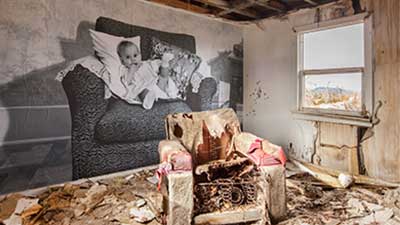
After we had digested the entire experience we started to think about how these techniques may be used in different ways. We were living in Eureka at the time, where there’s a ton of abandoned mining structures and housing left over from bygone gold rushes.


by
It’s time to re-know Reno. 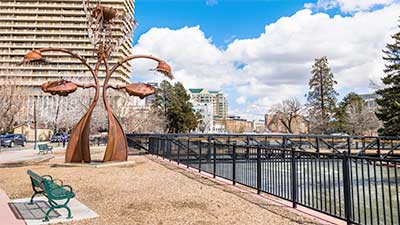
Things to Do and See
Thanks in part to the annual Burning Man Festival in the Nevada desert, Reno has established itself as a year-round destination for art. Perhaps the best spot to experience these pieces is the Playa Art Park in the heart of downtown just north of the famous Reno Arch. The park exhibits some of the hottest of the Burn every year and boasts about 10 pieces in all. In October 2018 three new installations joined the mix: a sculpture of a towering head, a sculpture of a horse, and a scale model of the world’s oldest bristlecone pine tree. (For more art, hit the streets south of downtown for the Midtown Mural Tour.)


Conforte and Me
by Bill Metzker
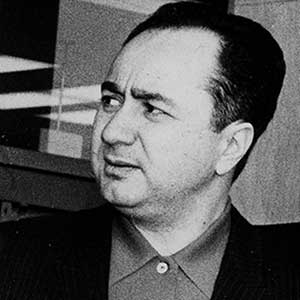

For a short time, parakeets were a fad, kind of like Hula Hoops and Paleo and Beanie Babies and bitcoin, and Sewell’s loaded up a section of the store with parakeets and cages. 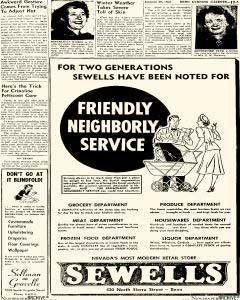

5 Years Ago in the NevadaGram
Still seeking a profile theme for Winnemucca?
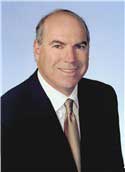

Ralph grew up in Winnemucca, and showed such promise that he was gifted with a college scholarship by a local friend, and eventually went to work for T. Boone Pickens and ‘made good in a big way’, as we used to say. He came back to his old home town a shrewd investor and he donated a million dollars to the county school system. 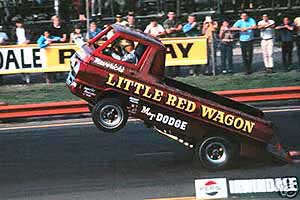
Then he began planning “America’s Car Collection” and bought nearly 200 cars — movie cars, muscle cars, street rods, kustom kars, dragsters — the famous “Little Red Wagon” among them —almost all of them American cars of the ’50s, ’60s and ’70s. I told the beginning of this heartwarming story in NevadaGram #67 dated March 2007.
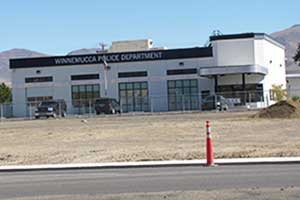
Overheard at the Martin Hotel in Winnemucca “You must live a balanced life, Laura. Learn some and think some, and draw and paint and sing and dance and play and work every day some.”
10 Years Ago in the NevadaGram

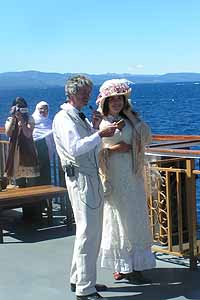
The combination of a sunny day, the sparkling water, Mark Twain’s stories of Tahoe in the 1860s delivered by the incomparable McAvoy Layne and his fellow entertainers (and a bar on every deck) made for a beguiling afternoon on Lake Tahoe.
The Tahoe Queen threshed across the broad blue water to Emerald Bay, where it lingered for a while as a camera magnet for the tourists on shore visiting Vikingsholm.
On the return leg of our placid journey the actors presented a micro-drama in which Maud Adams was accused by the rascally hermit of cheating at cards.

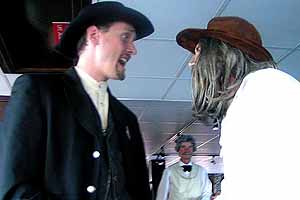
Mark Twain watched in pleased anticipation as Bat Masterson and Dick Barter prepared to slay one another for our entertainment.
If Bat Masterson hadn’t been nearby to offer his protection there’s no telling what that low-down varmint might have done. As it was, he was reckless enough to draw his six-shooter on the famous lawman, and got a dose of lead poisoning for his trouble while the onlookers cheered.
We were were also entertained by a woman making her first voyage on a big surfboard, standing upright and propelling herself out from shore with a paddle like a big broom.
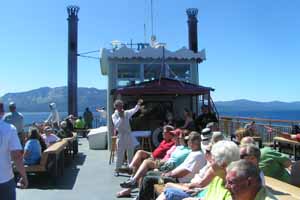
We wondered what sort of sadist had rented her that outfit, but I’m sad to report that she had us in stitches as she fought to keep her balance while making minimal progress into the gentle breeze blowing across the lake, finally falling overboard with a big splash into two feet of water.
15 Years Ago in the NevadaGram
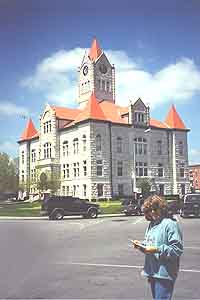
There are four Nevadas. One of course is the state that we love despite everything, and the other three are towns elsewhere on the map of the USA. One is in Iowa near Ames, one is in Wyandotte County Ohio (pop. 814), and the third one is the county seat of Vernon County Missouri, just a few miles from the Kansas border.
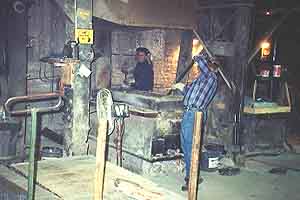
This Nevada has a county court house of majestic proportions, wide streets of two- and three-story buildings downtown, and the fabulous W.F. Norman Company.
Oh, and they pronounce it Ne-VAY-Duh. That’s right, Ne-VAY-da. It sounds even sillier than Ne-VAH-dah, but that’s how they say it. They 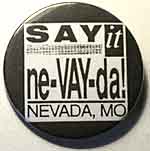

But they have no idea how the town got its name or why it’s pronounced like that.
It turns out it was all a mistake. My research (which I recite here from memory and in broad strokes) revealed that this section was one of the most violent in the country in the 1850s.
The little crossroads settlement here was burned twice before the Civil War and again during it. And every time it was burned, someone would rebuild and rename it. By 1868, someone suggested they rename the town and try again, this time without burning it down.
So the town fathers solicited suggestions for a new name, and one of them came from a man who’d been to the California gold fields and come home to Missouri with some money. He suggested they call it Nevada City, after the source of his wealth, and they did.
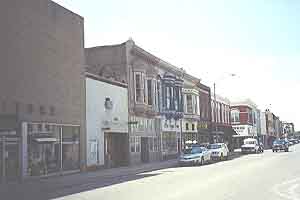
But the town failed to prosper anyhow, and over time people forgot it even had a name. When something finally came up that required a name for the place, everyone scratched their heads and wondered what it ought to be. Finally they restored the 1868 name, but modestly left off the “City” part, and since no one remembered how the name had originated, they mispronounced the other part Ne-VAY-da.
They still do. People there root for the Ne-VAY-da Tigers. No joke.
I’d like to suggest that every Nevadan stop here on cross-country trips, just for the fun of saying Ne-VAY-da out loud. And don’t forget to stock up on buttons at the Chamber.
Parting Shot —