


Last year Robin and I spent several magical days following Sam Clemens around Paris and when the opportunity came to come back again, I decided to see what else Nevada people have been up to here since Sam came to town in 1867.
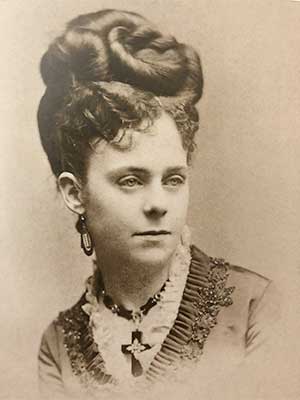


These were interesting and remarkable women, and they had great successes in Paris — Marie Louise Mackay (left) was a bright star in the social life of the cité (after failing in NYC even though her husband was one of the richest men in the world. hint: No Irish Need Apply), and Emma Nevada (right) was an internationally acclaimed opera singer. They contributed to Paris’ “Belle Epoque” (1879-1914), but most of what makes them interesting happened before they got here. [Read about their earlier years here]
They didn’t leave anything behind in Paris except their addresses (they both moved on to England). Louise lived at 9 rue de Tilsitt, a 5-story mansion on one of the streets circling L’Etoile, with the Arc de Triomphe in her back yard. Emma lived a long haul up the Avenue de Wagram, one of those streets that radiate like spokes away from L’Etoile, at #121. Once you’ve laid eyes on the buildings there’s not much else to do except find a convenient cafe and call for a Côte de Rhône.
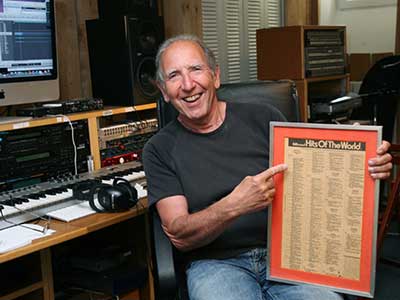

Three years later he was working for Radio Luxembourg as a part-time weekend dj, and from there worked himself into the heart of the music business.

He learned the art of producing records, established a music publishing company and began working with French composer/singer David Christie, (nom de plume James Bolden). They sold more than 50 million units with their songs.
Robinson then went on to produce a ton of music, including a string of songs at the top of the European charts, nine songs for Grace Jones and “Dancing In The Moonlight“, a massive hit in The USA with the group King Harvest. Now he’s writing the libretto for “Walking the Dogs“ a musical comedy being developed for the London stage.
That’s a splendid ride from Carson City, but when I asked him about other traces of Nevada we could find in Paris he drew a blank. To be fair, he was a Seattle guy, not long out of college, only in Carson City for seven months and so wasn’t much sensitized to Nevada after he arrived here.
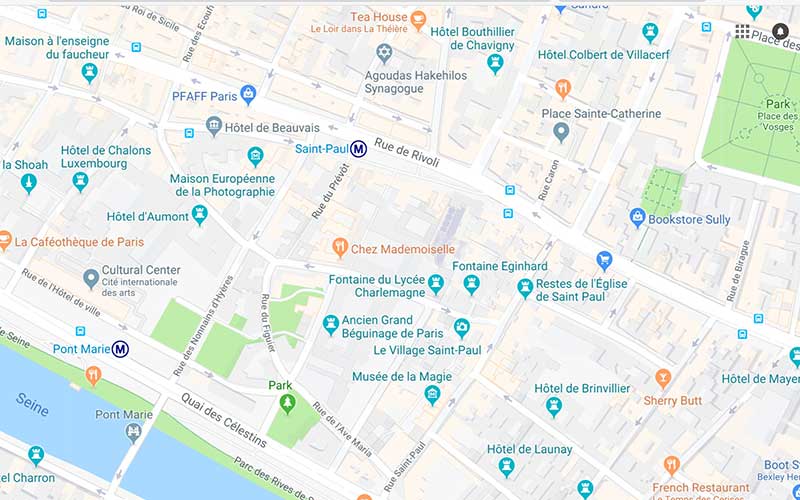
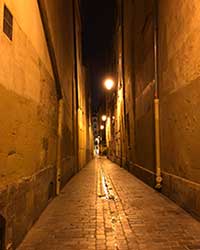
We stay in the Marais — that part of it between the Seine and the rue de Rivoli, centered loosely on the Village St. Paul — because it is so marvelously old. Just down the street to the left is an ancient church from which one of the Crusades set out for the Holy Land and a section of the wall that once enclosed the cité. And our quiet neighborhood is surrounded by the modern cité. This puts everything in the central cité within walking distance, and walking through Paris provides the same sense of wonder as gazing at the Toiyabes, but noisier.

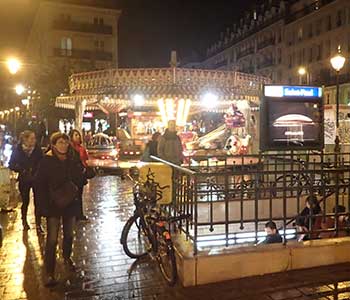


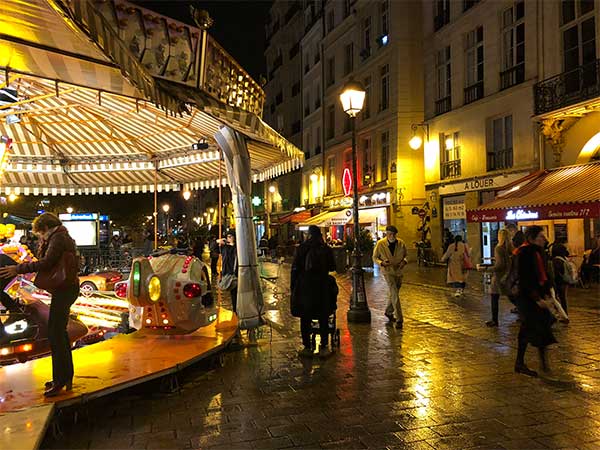
There’s a Metro station here — St. Paul (on the 1) — with an escalator that brings people up from underground in a constant parade, and a stairway that swallows down just as many. There’s a news stand were you can get all the French papers, plus the New York Times, and if it’s raining as it is just now, an umbrella. There are three police with automatic weapons (not always, but several times a week) — and there’s even a merry-go-round! This corner will always be the living heart of the cité for us!
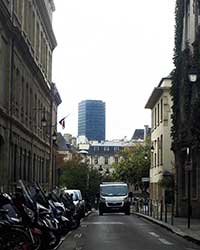
But even this teeming boulevard in one of the greatest cities in the world is part of a local neighborhood. People don’t just do recreational shopping here. There are grocery stores rather like ours (with lots of little differences), three within a few steps of the rue du Prévôt’s opening onto the busy boulevard, and a Monoprix Supermarket toward the Place de la Bastille about three blocks away.

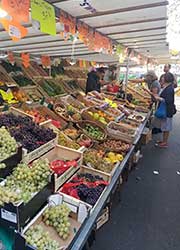
A walk to the market might take half an hour, shopping most of another hour at least, and then the walk back, perhaps with a stop along the way for a glass of Côte de Rhône or a nice Bordeaux, and to let the world walk on by. When we set out again we pass any number of landmarks — that’s not extraordinary, you can walk by landmarks almost anywhere in this part of the cité: Place des Vosges! Rue des Rosiers! Les Halles! Centre Pompidou!
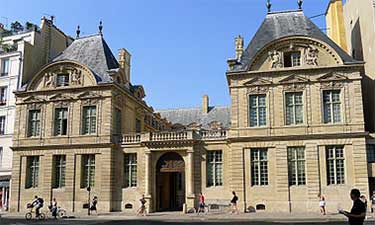

The grocery stores carry wine, but if you’re serious about it you’ll find three wine shops within one long block, one of them named Nicolas. The French system seems to favor this friendly practice: there’s also a boulangerie named Paul and cafes run by Richard scattered all over town. They’re all chains.
Permanent Wave in Paris
|
If you’re not familiar with French wines, here’s a quick guide. Good wine is very very cheap. Very good wine is very cheap. And very very good wine is cheap. Trés bon!
Need I say that restaurants abound, and spill out into the streets in all weather? And that they are an advertisement for the generous sense of humanity that the cité represents to us? Well, they are.
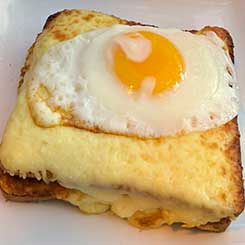
We especially liked Chez Mademoiselle and Pinot Grigio in our neighborhood, Le Petite Bofinger on the rue de Bastille has the best Croque Monsieur we’ve found since the street machines were outlawed, and the frites are as good as the ones they make at the International in Austin. Its parent Bofinger across the rue at #7 is our choice for the glamor meal. I felt positively Napoleonic as we clinked our glasses. One more? Au Bougnat, at 26 rue Chanoinesse on the Ile de la Cité where Paris was born. Its antiquity is palpable, and the chef is an artiste. And one more: Au Pied de Cochon within a few steps of Les Halles [hint: boeuf tartare].
A few glimpses of the cité —
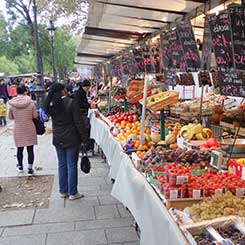

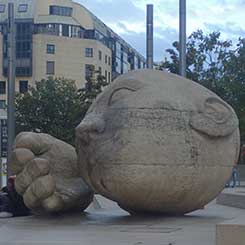
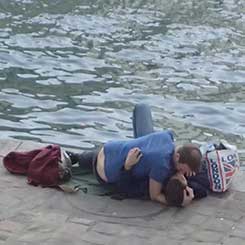
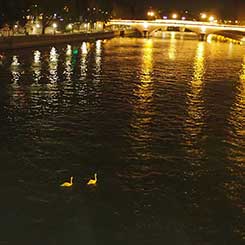
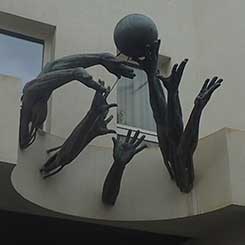
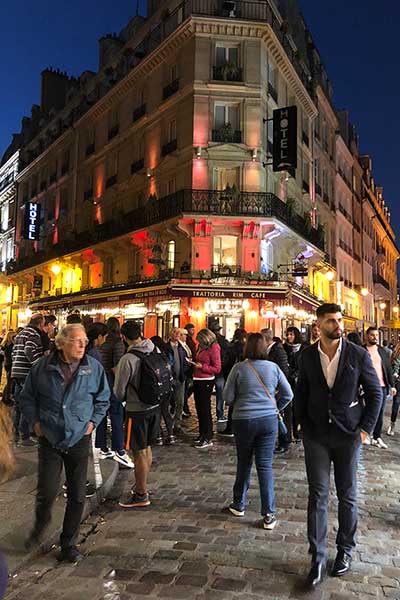

Night Life isn’t our strong point but we liked the jazz we heard on a previous visit and we make a point of hearing more of it. At home we’ll walk barefoot in the dark across a floor sprinkled with Legos to catch Sourdough Slim. Here we’ll walk over to the river, along the Quai des Célestines to the Pont Marie and stroll over to the Isle St. Louis, keep going across it to the pont Louis Phillippe and all the way over to the Left Bank.

Then we turn right and continue along the river past Shakespeare & Co. to the Boulevard St. Michel. There we take a left a short block to the rue de la Huchette where we turn left again, and then a right on rue de la Harpe to number 51: Monk La Taverne de Cluny. On Sunday nights Christophe Brunard and his son Julien play here [hint: nobody comes to Monk for the food, but the music is delicious]. Afterward we float back over more or less the same route, past Notre Dame all lit up, into the medieval maze of narrow curving streets.
We’ll be floating all the way home in another few days.
Editor’s Choice —
|

Overheard at the Canvas Cafe in Virginia City: “Here’s the trouble with women, Phil: they’re too much like men.”
Five Years Ago in the NevadaGram — A Call from Joe
|

|
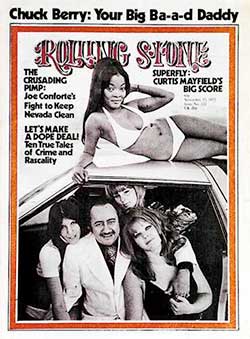
For an excerpt, click the cover.
|


I hadn’t heard from Joe for two or three years, and it was four years since I’d laid eyes on him at his Rio De Janeiro penthouse.
For those readers younger than 40, Joe Conforte was the hustler/trickster/entrepreneur who, with his wife Sally Burgess, transformed the Mustang Ranch from a broken down shack in the desert into an unofficial National Monument. It was the first licensed brothel in the USA, famous around the world, and he did it with all the cards stacked against him, with every lawman in the state eager to bring him down.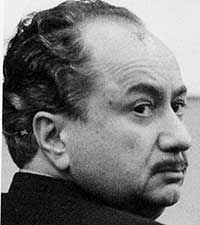

They put him in prison, they made him run for the border, they burned him out — and Sally too when he was in prison — but each and every time, he came back stronger than before. Today he’s living like a king in Rio on the proceeds from his Nevada life.
[ Our bookstore is closed temporarily, but we do have a small number of Joe’s book, both hard cover and paperbound. Send an email for details ]
Ten Years Ago in the NevadaGram — Mark Twain in Hawthorne
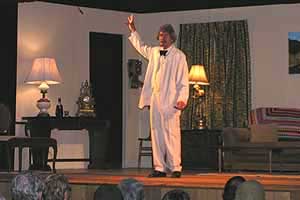

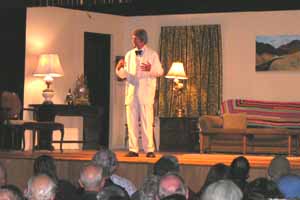
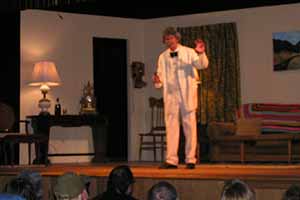
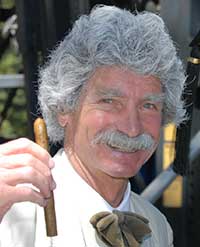
It wasn’t the original Mark Twain, of course — Hawthorne didn’t exist when Sam Clemens came to Aurora, 15 miles to the southwest, as a hopeful gold miner in 1861. For that matter Mark Twain didn’t exist then either — the letters that Clemens sent from Aurora to the Territorial Enterprise in Virginia City were signed Josh.

“The one appeases hunger; the other, thirst. But the natives do not take them separately, but together, as nature mixed them. When they find an inch of mud in the bottom of a glass, they stir it up, and then take the draught as they would gruel. It is difficult for a stranger to get used to this batter, but once used to it he will prefer it to water. This is really the case. It is good for steamboating, and good to drink; but it is worthless for all other purposes, except baptizing.”
15 Years Ago in the NevadaGram — Winnemucca and Austin
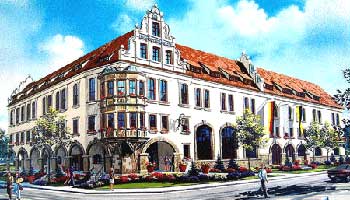
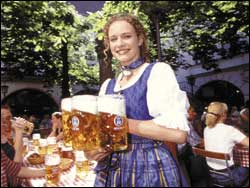
The only disappointment of my recent visit to Las Vegas was that Hofbrauhaus Las Vegas was not yet open.


Parting Shot —
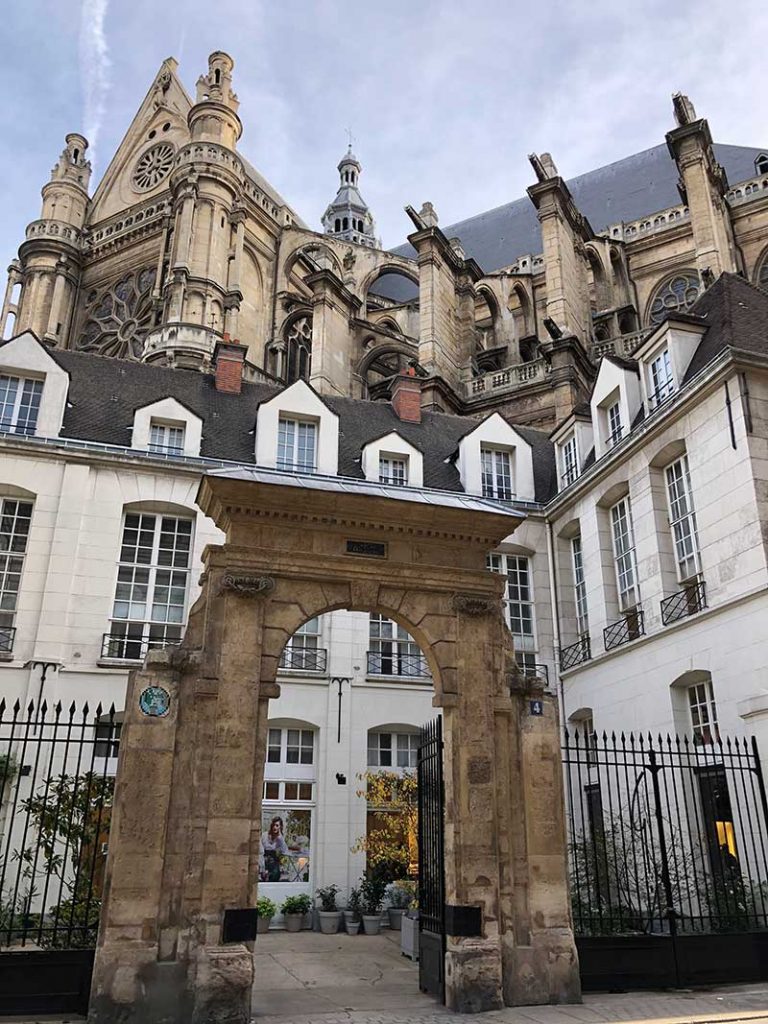

Paris by Robin Cobbey