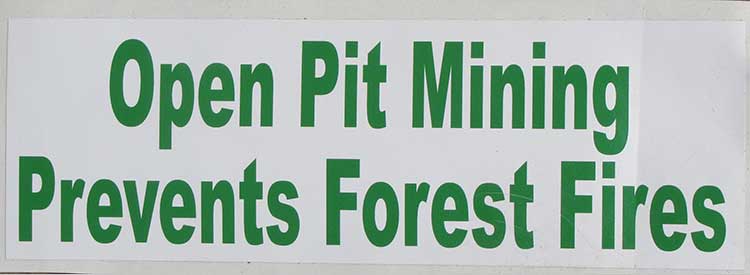
We failed.

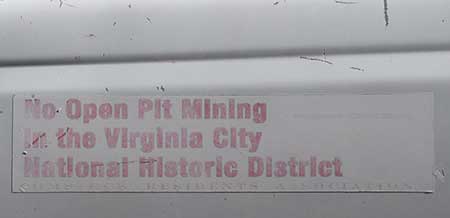
For more than five years residents of the Comstock tried to keep an upstart mining company from digging an enormous pit mine in the the Virginia City National Historic Landmark just above Devil’s Gate in Gold Canyon. Despite our efforts the pit was dug.
But the mine was a bigger failure than the resistance. More than $200 million in stockholder money spent over five years with nothing to show for it except an endless chain of zeros in the profit column.

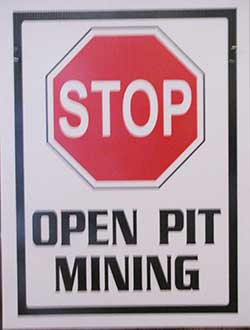
Why? Because the company’s inexperienced executives indulged in aspirational prognostications, and what they discovered when they dug was: there was no ore there.
Ore is defined as “a metal-bearing mineral or rock, or a native metal, that can be mined at a profit”. So metal-bearing minerals or a native metal mined at a loss might be rich dirt, but it is just dirt, not ore. There are huge heaps of this rich, unprofitable dirt uglifying American Flat, and the immense hole in Gold Canyon called the Lucerne Pit isn’t going away.
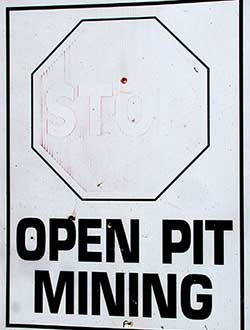
A Viewpoint with parking will invite visitors to look into the abyss, and informational signage can tell the story of how Comstock Mining Inc (or is it LLC?) became the biggest loser in the history of the Lode. These informational placards can perpetuate the names of the County Commissioners who so eagerly welcomed CMI into Storey County to dig this hole without a credit check: Hess, Sjolvangen and Kershaw; Gilman, McBride and Mcguffey. In big letters please.
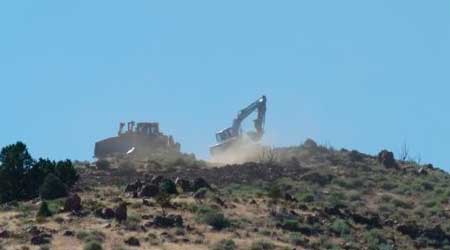

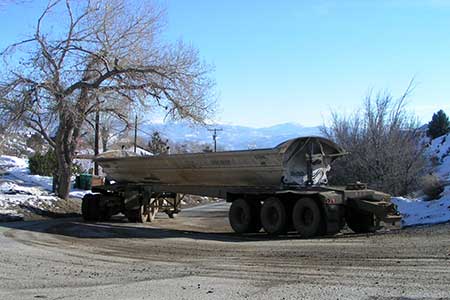
The displays can point out the futility of trying to replicate the glory days of the 19th century in modern times. This was a great place to mine gold and silver in the 19th century, now not so much.

 THE EARP BROTHERS SEEK THEIR FORTUNES IN NEVADA. by Ron Soodalter
Life in the Old West—Hollywood notwithstanding—was often mundane. The deadly gunfights and daring hold-ups were comparatively few. Yet, certain names have attained legendary status, selling countless books and millions of theater tickets, while the reality was considerably less exciting. No two figures attempted to live quieter lives, yet were haunted by largely undeserved reputations, than brothers Wyatt and Virgil Earp, as their sojourn in Nevada would prove.
|


As visitors to the Overlook take in the view, they will not see much of the Comstock as it was. Apart from the huge hole, the company has completed ‘reclamation’ of some of its upcanyon property, and has made a new bed for Gold Creek on its way to Devil’s Gate. Mom Nature’s treatment of the Comstock landscape was rough and rocky, with holes all through it. As J. Ross Browne famously described it, this was a place where the bones of the earth show through its skin.
No longer.
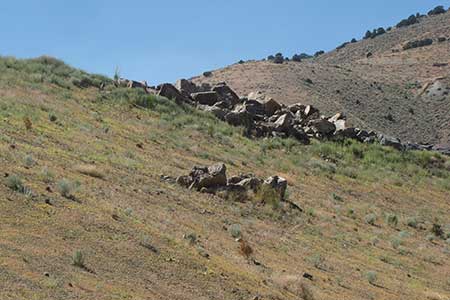

This section of old ground has been given a new look better suited to a suburban park than a historic landmark on the western frontier. Every contour is smooth, supple, modest and mild, with focus points of big boulders strewn carefully about for contrast. This is in contrast to the scarred and raggedy landscape that existed here, and that it pretends to reclaim.
We know what the pit cost CMI to dig . . . but has anyone computed the value of the authenticity of the Historic Landmark that was sacrificed when this prettified landscape was substituted for the real one?
If this were an opera — which it deserves to be — the fat lady would be standing in the wings, spraying her throat.
So prevalent is the local understanding that CMI has failed that the Comstock Chronicle (one of two newspapers in Virginia City) asked the celebrated John Tyson, a former CMI employee, to pose as a journalist and interview CMI executive Scott Jolcover about it. The resulting article — reposted here — should be required reading in journalism schools as a sweet piece of puffery. John lobbed his questions over in slo-mo, big fatties the size of beach balls, whistling Yankee Doodle on their way to the plate, so even a blind man could hit them.
John concluded his article, “So the question remains, is CMI solvent or is time running out? According to Jolcover, mining has its ups and downs just like in years past, but the mine is still operating. And to this reporter who has to take things at face value, I couldn’t help but notice the gate is still open. There are still cars in the parking lot. There are still people working in the main building and it appears no one is ready to throw out the cat, turn off the lights and lock the doors.” [emphasis added]
A reporter who takes things at face value is about as useful as tits on a boar. The article reminds me of a story about a man who fell from the Empire State Building, and was heard to call out as he passed the tenth floor on his way to the sidewalk, “I’m all right so far!”
Comments on the company message board weren’t so optimistic: “I see the Gold Hill Hotel is on the market again — $1.4 million. Can you say cash flow problems?”
“The Gold Hotel has always been a money pit, that’s why it was sold by the previous owner. Maybe CMI didn’t do due diligence. Or maybe they thought they needed a tax write off for all the $$ they would make on the Lucerne pit mine. Or perhaps they were seeking the prestige (a prestige-seeker and his money are soon parted), of owning an historic landmark that would demonstrate their commitment to historic preservation and being ‘part of the community’, neither of which anyone believes.”
“Two more mining trucks were being loaded on transporters to be carried away this morning. Hope they have enough trucks left to carry the impending bonanza of gold to the leach pad.”
“Or enough trucks to transport their office furniture to the auction block.”
Richard Bangs Dispatch #3: Baker to Kingston: Now we head west on Route 50, the former Pony Express route. 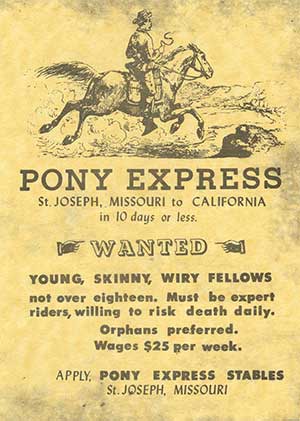

The route is now known as the Loneliest Road in America. In 1986, Life Magazine ran an article about Nevada State Highway 50 entitled “The Loneliest Road.” An AAA spokesperson had described the route through Nevada in these words: “It’s totally empty. There are no points of interest. We don’t recommend it. We warn all motorists not to drive there unless they’re confident of their survival skills.”
So many things about Nevada seem counterintuitive. In that vein, Nevada tourism officials seized on The Loneliest Road pejorative as a marketing slogan, and created signs, stickers and brochures touting such.
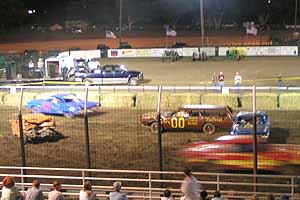
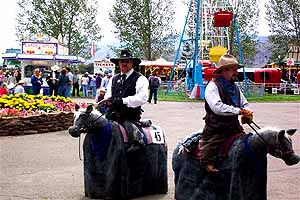
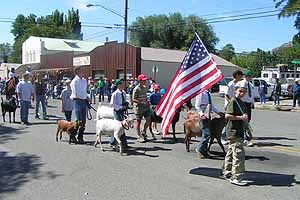
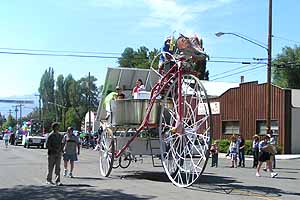
Ten Years Ago in the NevadaGramCedarville is at the foot of the mighty Warner Mountains and is the principal community within the Great Basin’s northwestern rim. Much of this section of eastern California was once claimed by Nevada and embraced within Roop, and then Lake County. Cedarville was still called Deep Creek when it was a part of this short-lived Nevada province, and I still claim it for Nevada, as it is a delightful place: pretty as a postcard, well provisioned with food and drink (yes, you can get a latte), and provided by a benign providence with an excellent bookstore. And the Modoc County Fair is a dreamy mix of nostalgia, hilarity and cowboys.
|
||
It’s hard to pick a favorite moment from the many, but maybe it was at the baking competition, where the pies and cakes were displayed: there was only one little sliver left of the pie that won Best of Show. |
They were right, though, as the lonely quality also makes this one of the most sublime corridors I have ever experienced. Much of the time it reminds me of Jerry Bruckheimer’s film intro logo, the boundless straight road and the lightning bolt. After hours of nothingness, it seems we’re driving ever closer to the origins of the earth. A tumbleweed sweeps across the road, whispering some hoary invitation to explore beyond the pavement.
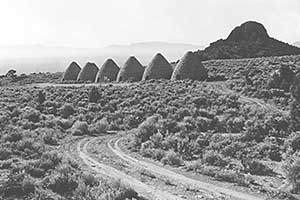
We seem to be navigating a large unfurnished chamber in this next stretch, but it is an occasion with room to think; room to breathe. The interstice is rich here.
In the little community of McGill we stop at the Rexall Drugstore, but it’s not like my neighborhood Walgreens. Stepping inside is like stepping through a time-warp, as though half a century ago the owner went out for a cigarette and never came back.
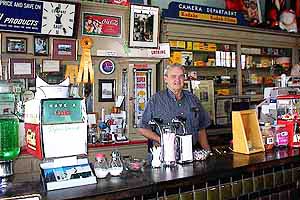
Daniel, an irenic soul who makes peace with the past, gives an archeological tour down the memory lanes, finally showing off the space in the back where home remedies and prescriptions were mixed in-store, next to stacks of original invoices, dating back to 1915. Before we leave he dollops double scoops of ice cream at the old fashioned soda fountain, and hands them to us to lick vanilla memories.
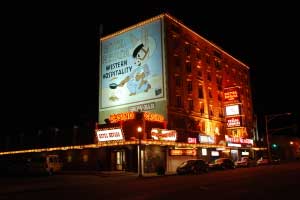
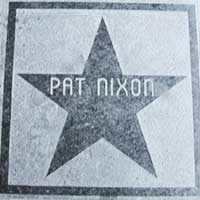
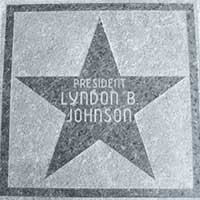

The receptionist draws a sly smile; silently hands me the key.
Overheard at the Gallery Bar in Elko: “I love everything of yours — your eyes, your smile, but most of all your friend Ellie.” |
The Nevada Calendar —
August is teaming with things to do in Nevada. On the east side off of Highway 50 in Ely go to the Bristlecone Arts in the Park Festival on August 6th and 7th. The very next week on August 12th and 13th check out the White Pine Rodders’ Car Show at the Courthouse Park on Aultman Street. Then on August 19th through the 21st Ely hosts the White Pine County Fair and Horse Races. So much to experience around Ely: Cave Lake, Renaissance Village, historic train, museum, Garnet Hill, Art Bank, and the famous Great Basin National Park nearby and plenty of good places to stay and eat. . . From Ely travel west on Highway 50 and attend the Eureka County Fair on August 11th through the 14th. Continue west down Highway 50 and turn south Nevada State Route 376 for Kingston Days which is scheduled for August 6th. just over the hill will be the Annual Austin Fly-In on August 20th 
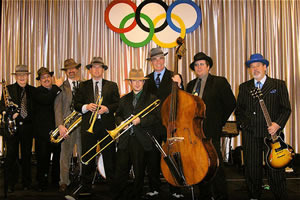







Parting Shot —