

In Nevada, even in our Age of Tesla, it is still possible to venture as deep into history and prehistory as you care to go. Here’s a day trip from Ely or Eureka that will take you off the pavement and into the scenery, out of sight of the modern world.
Comstock Mining Update
|
To do this, bring the survival essentials: digging implements, jacks and wrenches, fluids, and the 3 Bs: blankets, books and beer.
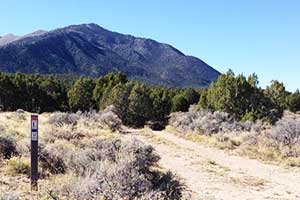
Then get yourself onto US 50 where the Green Springs Road takes off to the south at the far eastern edge of Newark Valley. If you’re coming from Ely that means driving about 10 miles west of the marked road to Illipah and Hamilton until you see the sign pointing south toward the Belmont Mill and Green Springs. That’s where you turn. Coming from Eureka you’ll see the turn-off just before the road begins its climb to Little Antelope Summit.
|
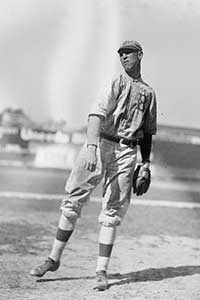
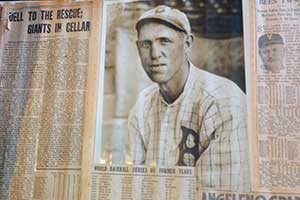
Seeking Wheezer Dell 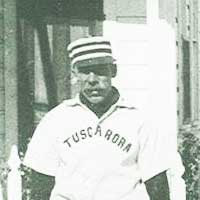 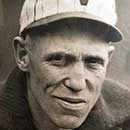 NevadaGram #142 included an item about the first Nevada native to play baseball in the major leagues. It showed a photograph thought to be Tuscarora-born Wheezer Dell, but research now shows otherwise. Through the magic of the internet I met Wheezer’s grandson, Bill Dell. Bill and his wife Marilyn are keepers of the voluminous Wheezer Archive. It chronicles his 18-year professional career beginning on the pitcher’s mound of the Butte Miners in 1909. He made it to the major leagues in 1912 (for 3 games), and again in 1915-1917, including a late inning appearance to close out game 5 of the 1916 World Series.
Here’s one of his movies to tide you over while I burrow deeper into the archive.
|

The Great Automobile Race came this way in 1908, with mechanic George Schuster at the wheel of the Thomas Flyer leading the pack from Ely to Tonopah, San Francisco and Paris via Hamilton and Railroad Valley. But we are not in a race, and with stops for photographs we take a half hour to get to the Belmont Mill.
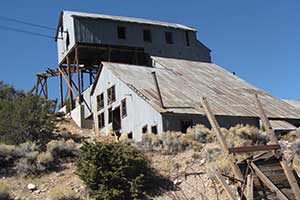
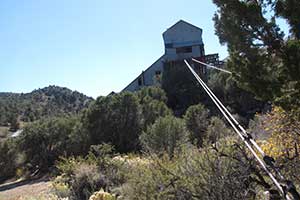
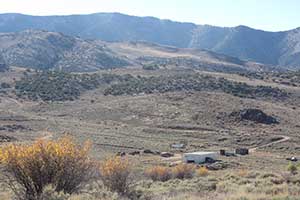
The mill is not named for the community northeast of Tonopah, but for the company that built it in 1926. The Tonopah Belmont Development Company was a major mining company with properties in Tonopah and Goldfield, which by then were in decline. The mill was built using parts and machinery scavenged from the company’s operations there.

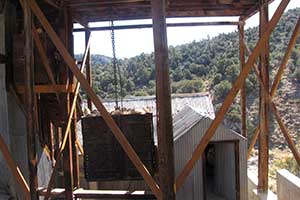
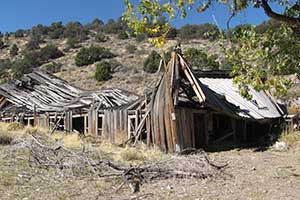
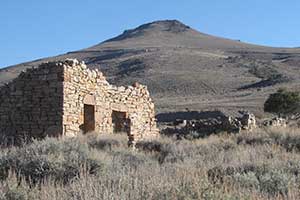
When we visited on this beautiful autumn day, the place was deserted at midmorning. We’d seen no-one on the road coming in, and there was no-one here either. There was no sound except the sounds of the earth, and no notion of the wider world. In fact, the only sign of an active presence is the evident amount of recent work that has been invested by the federal government. Less effort seems to have been made to preserve lesser structures, and some of them are losing their shapes as they merge down into the earth.
|
Five Years Ago in the NevadaGram
In a recent NevadaGram I pointed out some geographical confusion in Michael Connelly’s recent mystery, “The Scarecrow”. Play the video and hear the announcer read solemnly: “I headed north through the desert on Highway 93 toward E-ligh State Prison.” In an interview in January Magazine Connelly stated: “The only real on-location research I ended up doing was in Mesa, Arizona, and in the desert north of Las Vegas, off the highway known as the Loneliest Road in America.” Which (not to beat a dead horse) is US 50 and not US 93. In fact, he writes great fiction. |

We wandered freely through the old structures, marveling over them. We made note of the stout concrete footings and new timbers thoroughly braced, and studied the mechanism that pulled the cable down, emptied the buckets, and sent it back three miles up the mountain for more.
We prowled around separately, figuring things out as we went. Mercifully, there are no informational plaques to interfere with the experience.
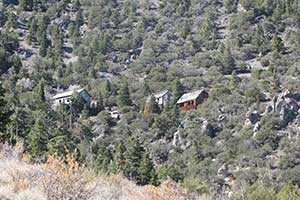
It’s a good road, but near the top there is a narrow squeeze between the steep cliff on one side and the abyss on the other. It’s quite passable but somewhat discombobulating if you are susceptible to altitudinal-disparity discombobulation.
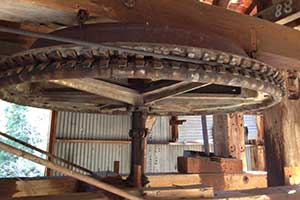
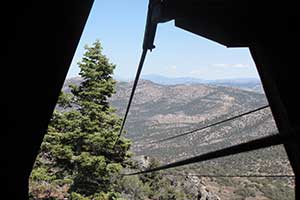
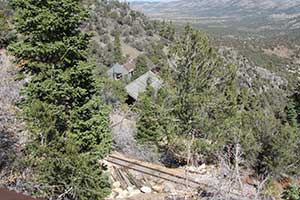
Once again we were grateful for the lack of helpful information on the site. This is not an exhibit, not a pinned butterfly, not a pressed flower, it is a real thing, seemingly abandoned, and we have just discovered it. Don’t burden us with factoids, we are exploring it for ourselves, and having fun doing it. It’s not a teachable moment anyway, it’s an exaltable moment.
|
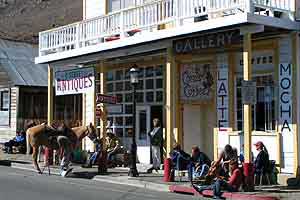
Ten Years Ago in the NevadaGram A new look at Virginia City reveals major changes brewing up in the old metropolis on Sun Mountain. Not only have property values quadrupled in the last year, Virginia City is reinventing itself as an upscale tourism destination, not just a day trip for hot dogs and beer. You can still buy a rubber tomahawk or its equivalent if you want one, but nowadays you’ll have to look for it. What you’ll mostly find are sophisticated retail shops selling seriously interesting merchandise: jewelry, clothing, furniture, books, art and artifacts of every kind. In the past I’ve been skeptical of the C Street retail atmosphere, so I am surprised to realize that this year I’m doing most of my Christmas shopping here, and recommending that anyone within a day’s drive do the same.
|

From here we retraced our route down the steep side of the Pogonip Ridge, and continued past the road to the mill to the next junction and made a right turn. Now we are back on the Lincoln Highway again, making for Hamilton just three miles away at 30 mph and filled with anticipation. What a beautiful day!

Prospector Jim Leathers was given a heavy piece of silver chloride by a local Indian in return for a purloined pot of beans (as the story goes) and in 1867 he and some others located the ground it came from and began working it. The find was high on what quickly became known as Treasure Hill, and as others heard about it, they joined the search for more. By the time the first snow fell, a little city had been built among the mines of local rock and lumber freighted from afar.
Treasure City grew up there naturally enough. But “natural” at 8,700 feet in these mountains includes no water, freezing winters, avalanches, fierce gales, no firewood, uncertain travel and no services.
“Treasure City has ten months of winter and two months of exceptionally cold weather”, somebody pointed out, and a townsite was platted on more or less level ground at the foot of Treasure Hill’s north side, 900 feet lower down.
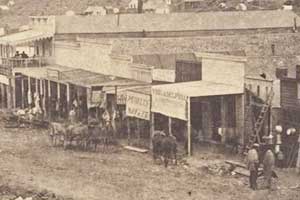
In June 1868 a saloon, the city’s first frame structure, was built to accommodate the 30 residents living around it in tents. Assays of the ore from the claims on Treasure Hill showed exceptionally rich values, and the news inspired a hectic “Rush to White Pine”. In August a post office was established.
Over the summer Hamilton grew to accommodate the thousands of hopeful new citizens, some of them coming by train from the east and west coasts, and making their way south from Elko via stagecoach, freight wagon or afoot.
Meet Ray Dunakin III
|

A letter to the Alta Californian from Treasure City in January 1869 stated “there were four deaths [here] on the 9th inst. The weather is very severe, and several persons have been badly frozen. Board is from $15 to $18 per week, exclusive of lodging, which is difficult to obtain at $1 per night. Little or no work is being done on any of the undeveloped claims. Persons anticipating a visit to the new district are cautioned not to do so before spring.”
But people came anyway. The mid-winter population at Hamilton was nearly 600 idle hands, and in the spring of 1869 the rush was on in earnest. By the time the roads were passable in the higher altitudes, a half-dozen stagecoach lines were running to Hamilton on a regular basis, bringing 75 to 100 eager new arrivals every day, and carrying away the disappointed. When White Pine County was organized in March 1869, Hamilton was named the county seat, and by summer’s end the town’s promoters were boasting about a city of 10,000 — no, 12,000!
For such a mighty city to suddenly burst into life in that remote place, the mines that supported it must be inexhaustibly rich! Indeed, they had already produced more than $22 million! This would be bigger than the Comstock!
When winter closed in again, though, Treasure City’s business community lost heart. In January 1870 the White Pine NEWS, edited by W.J. Forbes (who had come to White Pine to run a saloon but had fallen back into journalism), moved from its frozen aerie down to Hamilton, joining an exodus of attorneys, brokers of every kind, a wide variety of entrepreneurs, storekeepers and others who preferred staying warm over proximity to the mines.
Over 13,000 claims were located on Treasure Hill in less than two years, although few of them were ever actually worked. From those few, however, silver practically gushed.
Until it didn’t. The mines were rich, but most were shallow, and by the end of 1870 the boom was over. The census that year counted 1,920 residents of Treasure City, 3,913 in Hamilton and 932 in Shermantown.
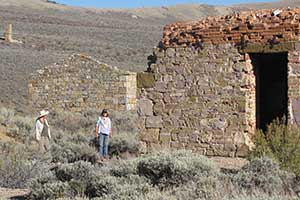
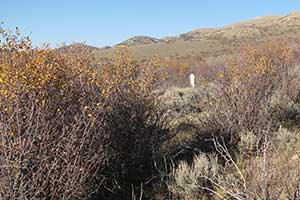
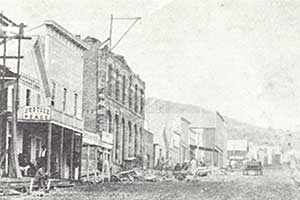
There was another fire at Hamilton in 1885, and this time the Court House burned. In 1887 the White Pine County seat was moved to Ely. That was the end for Hamilton, and it has been falling quietly to pieces ever since. Photos taken in the in the 1950s show the Withington Hotel facade beautifully intact, but now even the ruins have fallen into ruin and what was once the most elegant hotel between Denver and Virginia City is only a pile of bricks.
Overheard at the Jackson House in Eureka: “Can the bartender make a Manhattan cocktail?”
“Yes, he’s from the big city.”
“Which big city?”
“Fallon.”
Quick notes from beyond the mountains: The popular Sassafras restaurant, which was forced out of its downtown Carson City location earlier this year, will re-open soon at Carson Hot Springs Resort, according to the restaurant’s owners . . . The South Lake Tahoe Premier of Warren Miller’s “No Turning Back” is Friday, November 7 and Saturday the 8th in the South Shore Room at Harrah’s Lake Tahoe. Show time is 7 pm and tickets are available only at www.warrenmillermovie.com, Sports LTD in South Lake Tahoe and at the South Shore Room box office. All tickets are $16 . . . Remember Last Chance Joe? He’s the 36-ft tall, smiling one-toothed white-bearded prospector with a floppy hat and a pistol on each hip, formerly outside the B Street entrance to the Nugget in Sparks. He was built in Los Angeles in 1952 and shipped out to Sparks on May 12, 1958. According to his
plaque, he required a special flatcar and had to be routed through Oregon because of tunnel clearance. He was removed on October 7 for repairs, and will have a new home outside the Sparks Heritage Museum in the spring of 2015 . . . If you’ve ever wondered what happens when a major range fire comes burning your way, here’s the story of a Close Call at Tuscarora . . . The Great Basin Water Network has a nifty new website . . . Speaking of nifty websites, this one has links to tons of movies and tv shows made in Nye County. Lots of them were made in Beatty and Pahrump but surprisingly few in Tonopah. Several Episodes of State Trooper TV show were filmed there though, with Rod Cameron in the title role . . . Sheriff Stone of Gold Point wonders how many of you are hungry enough to come to the annual “Day after Thanksgiving Dinner” on November 28th. He and Red Dog Lil are planning on serving around 2 pm-ish. He writes: “You’re welcome to show up early for ore dervies around noon, but so we can buy and prepare enough food please lettuce know if you’ll be hungry enough to join us (at this time we have 37 coming for food). We’ll have the usual Turkey dinner with honey ham, stuffing, mashed spuds with gravy, green bean casserole, yams, Brussel sprouts, rolls, cranberry sauce, variety of deserts, chips and dips, and ass. veggies and deviled eggs. Cost will be $16 per person (at this time there are still 3 RV spots and 2 standard cabins available)” . . .
Parting Shot —
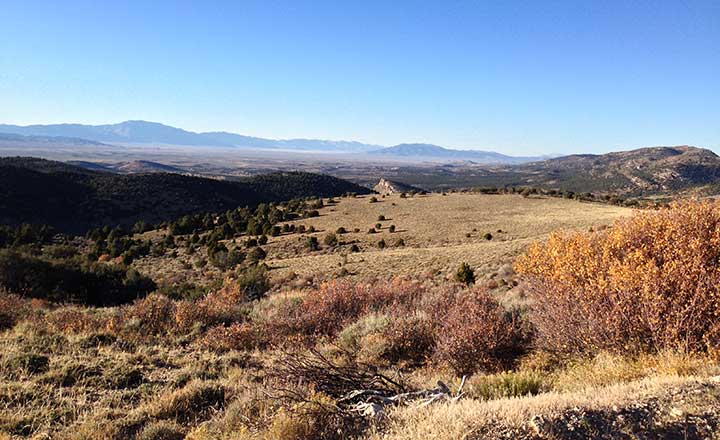
This is the view northwest from the Hamilton-Illipah road as it crests a summit before dropping down toward the US 50 at Illipah. You are seeing the immense sweep of the Newark Valley, with the Diamond Range beyond, about 50 miles of timeless tranquility. Photo by Robin Cobbey