

In this edition:
Ely, Las Vegas, Laughlin, Lincoln County, Mineral County, South Lake Tahoe
Ely
Ely and White Pine County: Full of History
During its past, Ely was a mining town. In the 1870’s and ’80s, White Pine was part of a boom when British money was invested in the silver mines. After 1900 came the copper boom. In the next 70 years, more than a billion dollars in copper was shipped out of the area. Much of the mining and milling done recently was reworking the waste dumps of the past. Today, copper, gold, and silver are the main minerals mined.
Ranching also played a major part in the history of the area. Cattle and sheep raised here were shipped to the eastern markets. Farming of alfalfa was developed to feed the livestock.
Ely is expanding into industries other than mining. One branch of the state prison system and an honor camp are located here. Expansion of tourist facilities has begun, and several cottage industries have started up.

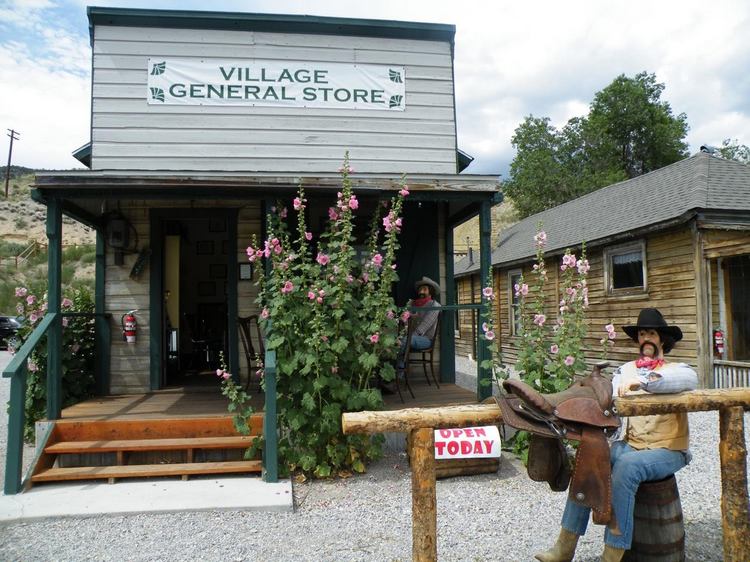
The Ely Renaissance Society mural project enhances the downtown area and portrays our history. Several murals have been completed by this group, in addition to others that add local color. A sculpture garden and labyrinth add to the outdoor art experience. The Renaissance Village is a restored collection of ethnic houses that represent homes here in the early 1900s. Check the website at elynvarts.com for information. The Village is open Friday and Saturdays mid-May through September, with the Farmers Market in mid August through September. It is located at 400 Ely St. In November, the Village transforms in to the North Pole for the Polar Express Train rides. Information about the murals and the Village can be found at elynvarts.com.
The Ely Art Bank, an art gallery and cultural center, is located in a restored bank building in downtown Ely next to the Garnet Mercantile. Stop in to see Art Among the Aspens and so much more. Art work by nearly 40 artists is on display.
Downtown Ely offers a friendly, small town atmosphere where people can window shop … and stop to admire the outdoor art. Take time to explore the unique shopping, variety of dining experiences and the friendly atmosphere where visitors stop in at a historic soda fountain for delicious treats.
There is much to see and do around White Pine County. Great Basin National Park, Cave Lake and Ward Charcoal Ovens State Parks, and the Mount Moriah Wilderness Area, are nearby. There are excellent hunting and fishing areas. Campgrounds are available. Wilderness activities and licensed guides are also available.
Special events are scheduled throughout the year. Ice fishing is popular in the winter. The Ice Fishing Derby and the Fire and Ice Sculpture show with fireworks are held in January. The Cannons and Cocktails Boat Races are held in June, with fireworks over the lake. These events take place at Cave Lake State Park. Events can be found in this publication or at www.whitepinechamber.com or elynevada.net.
A variety of museums are available for those interested in exploring the past. The White Pine Public Museum, located at 2000 Aultman Street, has a wonderful collection of artifacts from the past, a prehistoric cave bear exhibit and a huge doll collection.
McGill
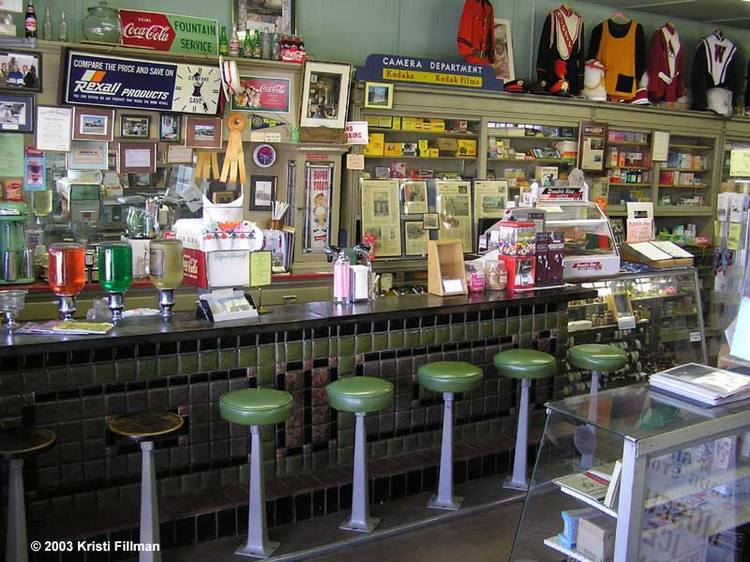
The Consolidated Copper Company bought water rights to operate the smelter to refine the copper ore mined at Ruth. The smelter would be located where the water was. Therefore, the town of McGill was born. McGill is the home of the McGill Drug Store Museum. The stock and everything used to run the business in the 1970s is still on the shelves, and the soda fountain is operating. Don’t miss this chance to step back in time to a store left just as it was when the last customers left in the early 1970s.

Ruth
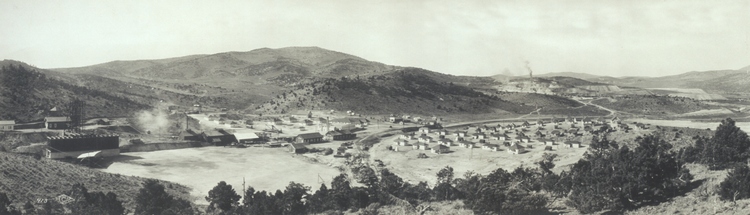
Old Ruth was originally the location of Consolidated Copper Company. Eventually the open pit mine began to overtake the town, and the town was moved to where it is now. It became New Ruth, and later just Ruth. After closing in 1999, the mine reopened in 2004 and continues to operate today. A company town in the beginning, Ruth’s houses and buildings were sold by the Kennecott Copper Corporation to individual owners in 1955.
Lund
Lund is one of the settlements of the L.D.S. (Mormon) Church. In 1898, when the church decided to colonize, the Plane ranch became the town of Lund, and the Maddox ranch became the town of Preston. Some of the original adobe buildings are still in use. Many other buildings were moved from the ghost towns of Ward and Taylor. In the dry weather of Nevada, building materials were too scarce to waste.
Lund and Preston were located on the stage line between Hamilton and Pioche. The line ran about where the junction of Hwy 6 and SR 318 is today.
Baker
In 1869, Absalom Lehman homesteaded in the Snake Valley. He decided it would be more profitable to feed the miners than to mine a claim. In 1885, he discovered Lehman Cave. He began what he called “cave crawling” that same year. The next year he began taking visitors through the cave. Almost 800 people visited the cave the first year.
White Pine County and the communities around Ely provide lots of places to explore and history to learn.
— Lorraine Clark
Las Vegas
Diamond Jack’s Picks for March




Last week, I was introduced to an undertaker who told me that jut before his most recent funeral service he asked the elderly widow how old was her husband.
“98,” she replied. “Two years older than me.”
“So you’re 96?”
“That’s right,” she responded. “It’s hardly worth going home.”
— Diamond Jack Bulavsky
Drinking and Driving in Las Vegas
This is a no-no-no matter when you are in Las Vegas! We do want you to enjoy your time in here, but we would rather you leave the driving to others if you are drinking. That being said, there are many driving-related activities taking place in March.


NASCAR weekend is March 10th through 12th. There is always a car hauler parade down the Strip to kick off the NASCAR festivities in town. It begins around 6 p.m. on Thursday at the Welcome to Las Vegas sign by Russell Road and goes to Sahara. This is really cool to see!



Sam Boyd Stadium will host the Monster Jam World Finals XVII from March 23rd to March 25th at 7 p.m. each night. Single day tickets for Friday or Saturday begin at $61, and you can buy a 2-night package for Friday and Saturday starting at $97 per person. All 3 days will run $197 and up.


March has always been a beer drinking time in Las Vegas, with March Madness for college basketball and St. Patrick’s Day thrown into the mix. You can go to any of the Strip or Downtown Hotels to celebrate the green and madness. However, it would be nice to try something different and do it for a good cause.
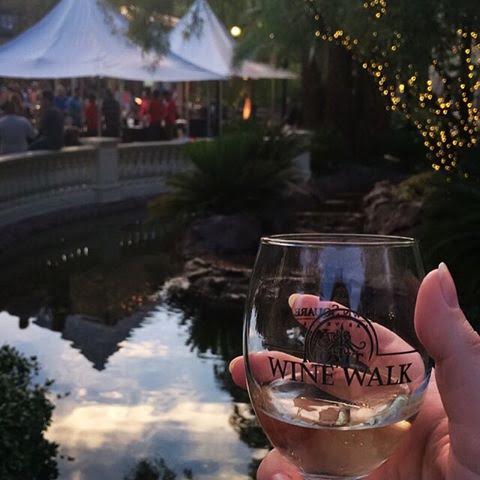

Side notes for this event: They usually give you a 1 oz. serving of the wine at each of the stations. So, do not expect a half or full glass of wine at each station! This is a charity event. Remember to bring a designated driver. They will be patrols of the area watching out for you. Try not to get there too late or they could run out of some of the wine.
Another wine and beer tasting, Splendor in the Glass, will take place on March 11th at Red Rock Casino Resort from 4:00 until 8:00 p.m. at their Crimson nightclub. This 28th annual event supports Vegas PBS, with more than 40 wineries and breweries represented. Tickets are $90 if purchased prior to the event date or $100 at the door. You can also purchase limited reserved seating for $140. This is an indoor/outdoor venue next to their pool, so they also offer a cabana package for 10 people for $2,500. They will have a silent auction, entertainment and both hot and cold hors d’oeuvres.
— Pauline Cimoch
‘Defending the Caveman’ Celebrates 10 Years Running in Vegas
This year, “Defending the Caveman” will celebrate as Las Vegas’ longest-running Broadway show having debuted in southern Nevada on June 1, 2007. On Friday, March 3, the telltale show about the sexes currently at the D


downtown starring Kevin Burke will host revered South African actor Tim Plewman at 6 p.m. for a special one-night-only performance of the one-man play. Plewman believes no matter what country you call home, the universal content of relationships transcends throughout. Tickets start at $29.95.
Plewman is a dancer, humorist, director, writer and producer. He adapted the script for Africa, where he performed Caveman for nearly 10 years and 1,544 performances. For the play, the longest-running and most successful solo comedy in South African theatre history, Plewman won the prestigious South African Vita Award for Best Actor in a comedy.
“Defending the Caveman” with its worldwide reach will continue the celebration throughout 2017 by hosting international performances of the show including the Mexican, German and Cuban versions. This Broadway hit has toured the United States and more than 40 countries with productions in nearly 30 languages.
The play originally opened in San Francisco in 1991, moved to Broadway in 1995, and played 702 performances at the Helen Hayes Theater over two-and-a half-years when it became the longest-running solo play in Broadway history.
Golden Nugget Hosts ‘American Craft Whiskey Festival’


The Whiskey Revival is an opportunity for guests to sample fine artisan whiskies, American craft spirits, and moonshines from a variety of America’s great distilleries. The event includes live entertainment and Southern cuisine, plus educational classes led by distillery owners and brand ambassadors.
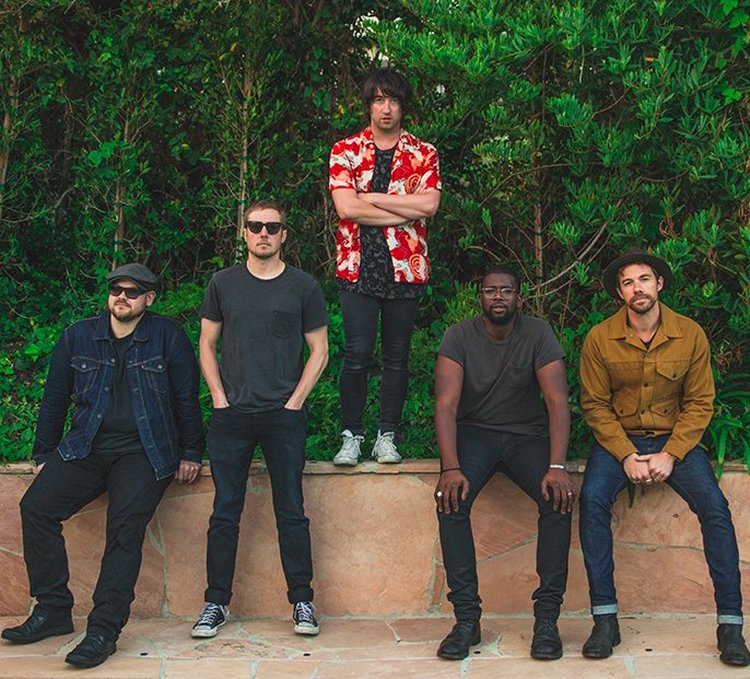

Rock ‘n’ roll band Plain White T’s will perform a two-night engagement at the intimate 180-seat Cleopatra’s Barge inside Caesars Palace with an acoustic show March 30 and 31 at 9:30 p.m. The unplugged performances will include a variety of the band’s notable hits, including Grammy-nominated “Hey There Delilah,” “Rhythm of Love” and “1, 2, 3, 4.” General tickets start at $69.
Plain White T’s kicked off their career in the Chicago suburbs, playing a mix of pop, punk, and melody-driven rock ‘n’ roll in basements and metro-area clubs. Now around 15 years later, the guys have done thousands of shows and have a string of multi-platinum hit singles.
— Jackie Brett
Laughlin
E Center Attracts Headliners Loggins, Mandel and Robinson
The E Center at the Edgewater has a “fab” lineup in March with Kenny Loggins, Howie Mandel and Smokey Robinson.


American singer-songwriter and guitarist Kenny Loggins leads the way Saturday, March 4 at 8 p.m. Tickets start at $35.
Loggins recorded his early songwriting compositions with the Nitty Gritty Dirt Band in 1970, which led to seven albums, and performing as the group Loggins and Messina from 1972 to 1977. As a solo artist, Loggins experienced a string of movie soundtrack successes, including an Academy award nomination for “Footloose” in 1984. He even released a children’s book “Footloose” last October, inspired by the Grammy Award-winning “Song of the Year.” Loggins early soundtrack contributions date back to the film “A Star Is Born” in 1976, and for much of the 1980s and 90s, he was known as “The Soundtrack King.” In 2013, “Finally Home” was released, and shortly after he formed the group Blue Sky Riders with Gary Burr and Georgia Middleman.
Canadian comedian actor, writer, producer and Emmy nominee Howie Mandel is set for Saturday, March 18 at 8 p.m. Ticket range is $35 to $85.
Mandel has done it all, including countless comedy specials on TV. Right now, he’s best known as a judge on NBC’s “America’s Got Talent,” replacing David Hasselhoff in the fifth season of the reality talent contest, and also for his fear of germs and preferring “fist bumps” to handshakes. Fans also know him from hosting his own syndicated talk show, “The Howie Mandel Show” and hosting the NBC game show “Deal or No Deal.” In his earlier career, Mandel was well known for his role as rowdy ER intern Dr. Wayne Fiscus on the NBC medical drama “St. Elsewhere.” Another accomplishment is also as the creator and star of the children’s cartoon “Bobby’s World.”


Motown great Smokey Robinson has locked in Saturday, March 25 at 8 p.m. Tickets are $40 to $90.
Robinson is an American singer, songwriter, record producer, and former record executive as Motown’s vice president. He was the founder and front man of the Motown vocal group the Miracles, and he was also the group’s chief songwriter and producer. During his amazing 50-year career in music, the prolific songwriter has accumulated more than 4,000 songs to his credit and 37 Top 40 hits, including “Tears of a Clown,” “Tracks of My Tears” and “Love Machine.” He also wrote and produced hits for groups such as The Temptations (“My Girl”) and Mary Wells (“My Guy”). Robinson went solo in 1972, and in 1989 wrote his autobiography, “Smokey: Inside My Life,” which addressed his battle with cocaine. Robinson was a Kennedy Center Honoree in 2006
Riverside Lines Up Country Stars Clark, Gilley and Bogguss
Don’s Celebrity Theatre at the Riverside Resort is focusing on country stars in March, with Terri Clark, Mickey Gilley and Suzy Bogguss headlining. Depending on the artists, tickets range from $30 to $38.


Terri Clark, who sings and plays guitar, hails from Medicine Hat, Alberta, Canada, will entertain March 3-5. Before signing with Mercury Records, she got her start playing for tips at the honky-tonk bar Tootsie’s Orchid Lounge, located across the alley from Nashville’s Ryman Auditorium. With her distinctive voice, Clark has garnered eight CCMA Entertainer of the Year awards and the CCMA Female Vocalist of the Year award five times. She has more than 20 singles, including six No. 1 hits in Canada and the United States, such as “Better Things To Do,” “Poor Poor Pitiful Me,” “Girls Lie Too,” and “I Just Wanna Be Mad.”


Mickey Gilley, who will headline March 8-12, learned to play piano at an early age but did not achieve success like his cousin Jerry Lee Lewis until the mid-70s. In 1971, Gilley and a partner opened Gilley’s, known as the world’s largest honky-tonk. It was there Gilley started experiencing his first success, releasing “Room Full of Roses” and hitting the country charts with regularity in the ‘70s. The movie “Urban Cowboy” created a craze that put Gilley’s bar on the map and propelled Gilley’s career into high gear.
Taking center stage March 14-19 is American country music singer and songwriter Suzy Bogguss. Her career began in the early 1980s as a solo singer, and the Illinois native’s 1989 major label debut was “Somewhere Between.” In the 1990s, Bogguss released one platinum and three gold albums, charted six top ten singles and had more than three million sales. She scored a string of Top 10 singles with country radio staples like “Aces,” “Outbound Plane,” “Drive South,” “Hey Cinderella,” and “Letting Go.” Bogguss won the Academy of Country Music’s award for Top New Female Vocalist and the Country Music Association’s Horizon Award.
Motown Rockers Rare Earth Appear In Concert at the Avi
Rare Earth, Motown Records’ one and only successful white band from 1968 to 1978, will visit the Avi on Saturday, March 25 at 8 p.m. Tickets are $20, $25 and $30.
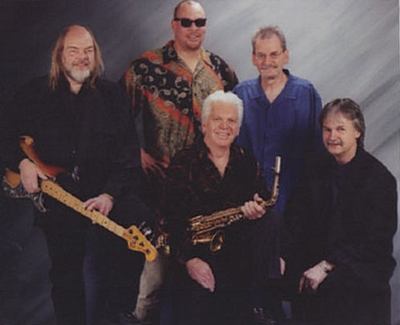

Motown wanted an album immediately. Rare Earth had been playing a lot of Motown songs in clubs. However, one of their tunes was “Get Ready,” which started out as a three-minute song. Eventually, one member did a solo until everyone wanted their own part, and the song became 21 minutes long and their closing signature song. Rare Earth wanted it to be their first recording and it took up one whole side of their first album, which was unheard of at the time. “Get Ready” first broke in Washington, D.C. in the black market, spread across the country and into the white market. It was a huge hit, selling millions of records and remaining on the charts for almost three years. Other Rare Earth hits from 1969 to 1974 include “Big Brother,” “Born to Wander,” “Tobacco Road,” “(I Know) I’m Losing You,” and “I Just Want To Celebrate.”
— Jackie Brett
Lincoln County
“P” stands for Pahranagat
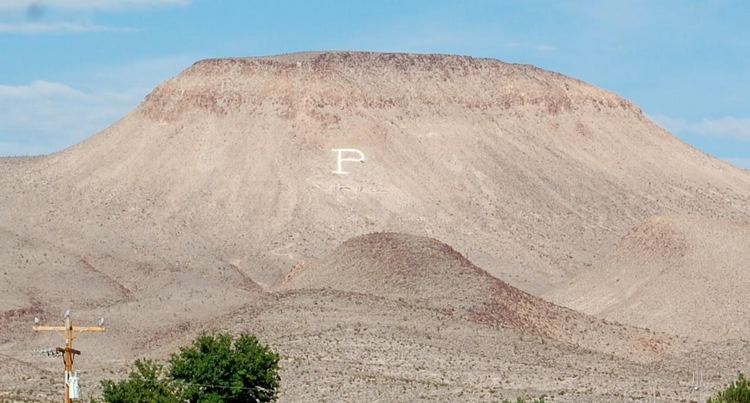

In the 1962 movie musical, The Music Man, Professor Harold Hill sang a song about how “P stands for pool,” but here in the town of Alamo it stands for “Pahranagat” . Go figure
But there is a reason; allow us to explain. Putting a marking or a symbol up high for all to see, to signify the location of a town or city, is not just a 20th century invention, the practice dates back to ancient times.
The “P” on Table Mountain in Alamo was not there when the Southern Paiute Indian tribes lived in the valley. It was not there when the first of the white settlers came to the valley in the 1860s. It was not there, either, when the first ranches were laid out by George Washington Richard and his descendants, who established an area that was to become known as “Richardville.” Nor was it there when Thomas Stewart led his group of Mormon settlers from Kanab, Utah to the valley with the express purpose of establishing a new town, and laid out the plan for streets. It was not there when the first houses and church buildings were built. It was not there when the first automobile came into the valley about 1915, and it was not there when the Great Depression hit the valley and the nation in the early 1930’s.
All of the people living here in those earliest days certainly saw the bare spot on the mountain, but thought nothing more about it. So the P on the mountain missed a lot of things. Imagine what the mountain would look like if the “P” were not there even now.
Yet, for most everyone living in the Pahranagat Valley today, the P has “always” been there, and most have never known a time without the large letter to see and take pride in.
In 1931, the schools in the valley finally unified into one district, and in 1937 a new high school building opened in Alamo, providing a full four-year program, in addition to affording more room than the older three-room school, just a stone’s throw to the north.
Other towns in southern Nevada have had, if not now also, alphabet letters to mark the location of their towns; Panaca, Lund, Ely, Moapa, Mesquite, Smith Valley and maybe others.
Back in 1937, with a new sense of pride from the new school building, it seemed like a good time to put a letter someplace on a mountain around Alamo.
Just who first came up with the idea, if indeed there was just any one person, may not be known, and it’s not even necessary. One local woman said, “Table Mountain is a special mountain, just made to fit.” So it seemed as good a place as any, and probably better than anywhere else.
The late Edwin Higbee, a life-long valley resident, said the decision to undertake the project was the work of the boys in the Ag class of PVHS teacher George Willardson. The late LaMoine Davis recalled that band teacher Horace Reed was the one who got the idea rolling. Whatever way it was, both said that Ag class member Elmer Davis was in charge of the project, with help from classmates Bill Lamb, Roy Nesbitt, Kay Wright, Higbee himself, Bruce Bunker, Keith Cutler, Charlie Hewitt, Max Erkenbreck, Dave Schofield, and maybe some others Edwin couldn’t remember.
Sometime in the spring of 1938, Davis, along with some of the boys and maybe Mr. Willardson and Mr. Reed, too, went up the steep grade on the mountain to pick a place where they wanted the letter to be. They selected a spot just above a ledge of rock outcropping nearly in the center of the mountain’s western face.
“First time we went up,” Edwin said, “we took horses, water and lime. Packed it all on horses and put water in 5-gallon gas cans. There used to be a lot of old 5-gallon cans around.”
The boys took the horses up as far as they could, then hiked up the rest of the way to the spot chosen. There was no path to follow, no living things except maybe birds, snakes and such, had ever been up there. They gathered up the largest rocks they could find on site, and there were lots of them, and placed them in the shape of the letter. “We didn’t have much,” said Edwin, “just a kind of an outline.” An outline of a letter 100 feet high and 50 feet wide.
LaMoine Davis, Elmer’s younger brother, said he remembered watching the guys up on the mountain that first time. He said he could walk out of the old school — still functioning as the grade school then – and go to the northeast corner (probably close to where the Alamo Medical clinic is today), and watch what was happening. He said there were people at the lower levels who had flags and by moving the flags in the right directions, like in the signal corps, could let those working with the rocks know how to set the lines properly, and he said, “They got it pretty straight, too, didn’t they?”So there it was, a big white block P just above that rock ledge outcropping, easily seen from most any spot in town.
Over the next year, it was somehow decided that the letter needed to be changed a little, so in 1939 some of the boys again went up on the mountain and added the base and the little tail to the top of the letter, making it look as it does today. This time other people of the community wanted to help also. Elmer Davis took his Dad’s old Chevy truck and drove that up the canyon.
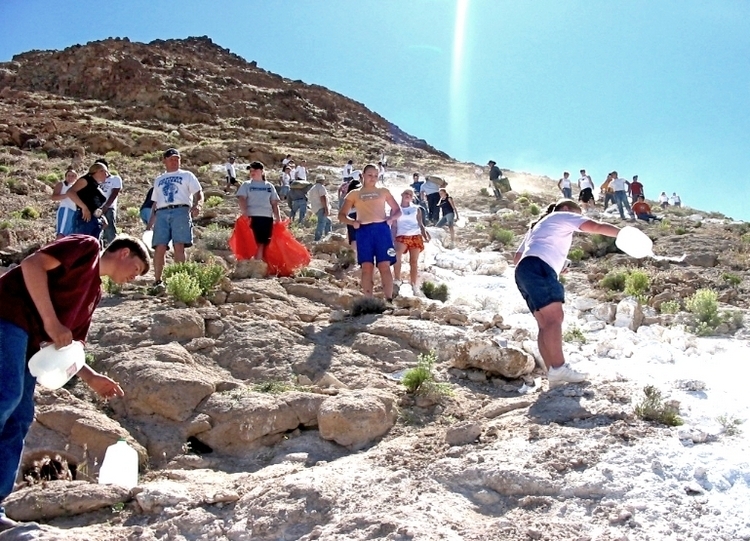

LaMoine Davis used to tell that in his own time in high school, plus probably for some years before and after, “It was a highly anticipated event. “And quite an ordeal, too. But when the work at the P was done for the day, kids usually skipped the rest of the day of school and went swimming at Big Ash,” which was then a popular and well maintained recreation spot.
Why was the letter P used when the name of the town is Alamo? Some of Alamo’s old timers say that when the schools all became one district in 1931, “There was a little bit of tension between the Alamo schools and others in the Pahranagat Valley, so it was decided that a “P” was the letter to use instead of an “A.”
The “P” spends four lonely years presently, maybe more, before it is visited again by the high school students. Since 1977, the school stopped going up every year and changed to going just once every four years, rather than not go at all. Former PVHS Principal Steve Hansen said doing it once every four years gives everyone who attends PVHS a chance to go up and experience this unique event if they want to. It’s something not done by schools in many other towns around the country.
Very few people actually get to up to the “P” because it is quite steep up there, but there it is and has been there for a long time, for everyone to enjoy. And it figures to be there for a long, long time to come.
— Dave Maxwell
Mineral County
Mineral County: Photographers’ Dream
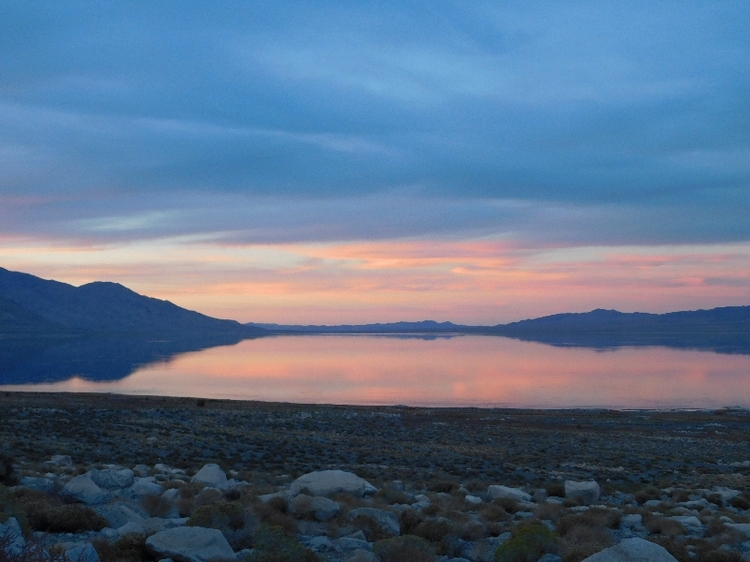
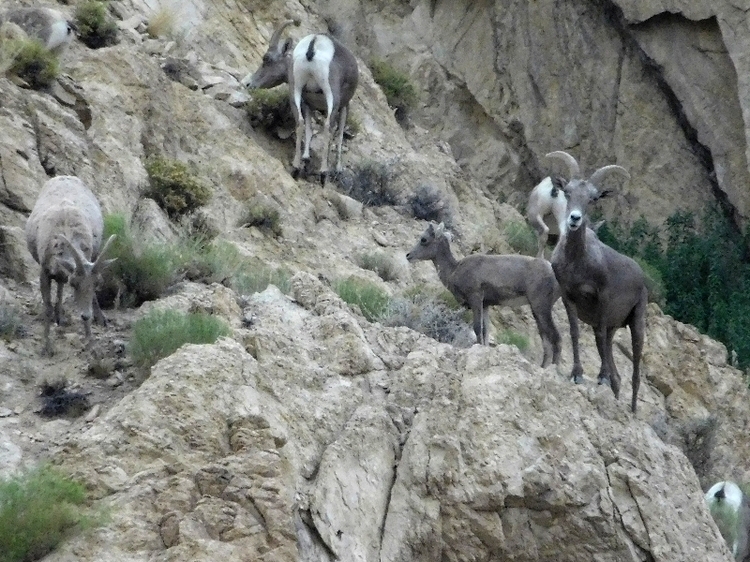
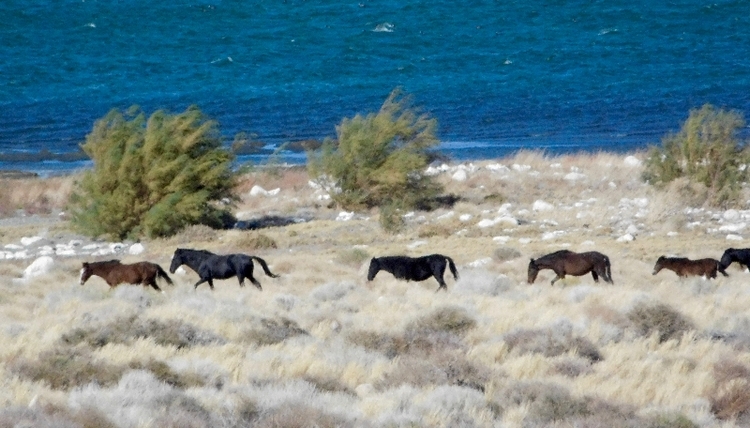
At the south end of Mineral County, enjoy photographing the retro signage or the weathered old clapboard homes of Mina and Luning, which are filled with nostalgic shots and some off-road opportunities, too.

— Sheri Samson
South Lake Tahoe
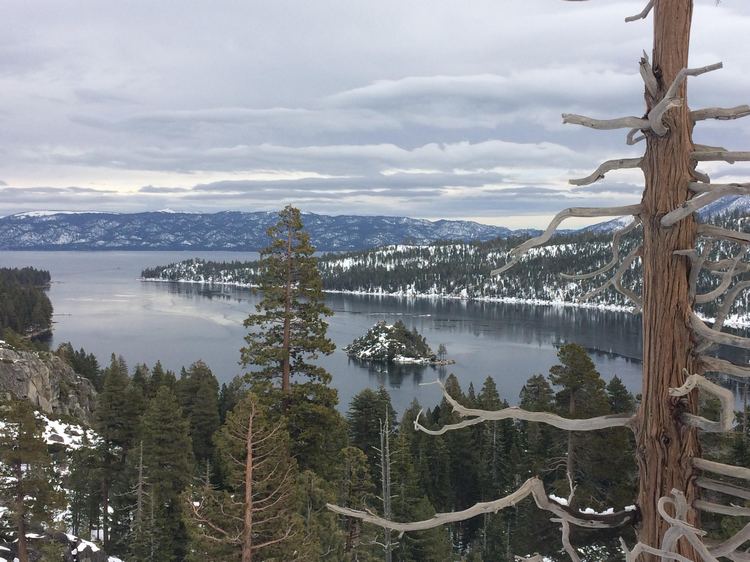
There are many roads to South Lake Tahoe, but during a stretch in February major highways into America’s year round playground were closed, and travelers had to take the scenic route to reach their destination. The record snowfall the area received in January was followed by a drenching of rain that was too much for some of the hillsides on a few thoroughfares. Tahoe was in some ways isolated while highway crews worked around the clock to get the roads open. It may have taken a little bit longer to get up here, but people were still rewarded with the same incredible destination.
Most might think there are no benefits to taking the long way, but when the skies clear up and the storms go away some of the smaller state highways can offer some great drives — such as Hwy 88 in California from Placerville to Lake Tahoe. Highway 50 over Echo Summit was closed to people heading up the hill from Sacramento due to multiple mudslides near Pollock Pines and in the Kyburz area. In order to reach the area drivers were diverted to Hwy 49 to Jackson, where they picked up 88 or picked up the Iron Mountain Road via Diamond Springs. Either way offers a scenic tour through the Sierra foothills and gold country that people tend to forget while zooming up the hill to get to Tahoe, and going this way doesn’t really take that much longer than Hwy 50.

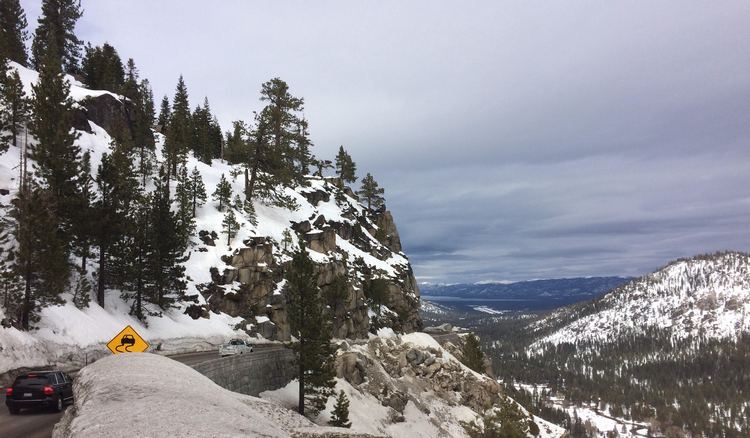
If you are a savvy planner and like deep snow to ski in, then you can hit up Kirkwood Ski Resort on the way up to the Lake off of Hwy 88. Kirkwood offers the deepest snow in the region, and usually on the West Coast. Its advanced terrain is ideal for powder lovers, and if one leaves Sacramento early enough one can spend the day skiing and still have plenty of daylight left to make the rest of the journey to the hotel or cottage up at the Lake.
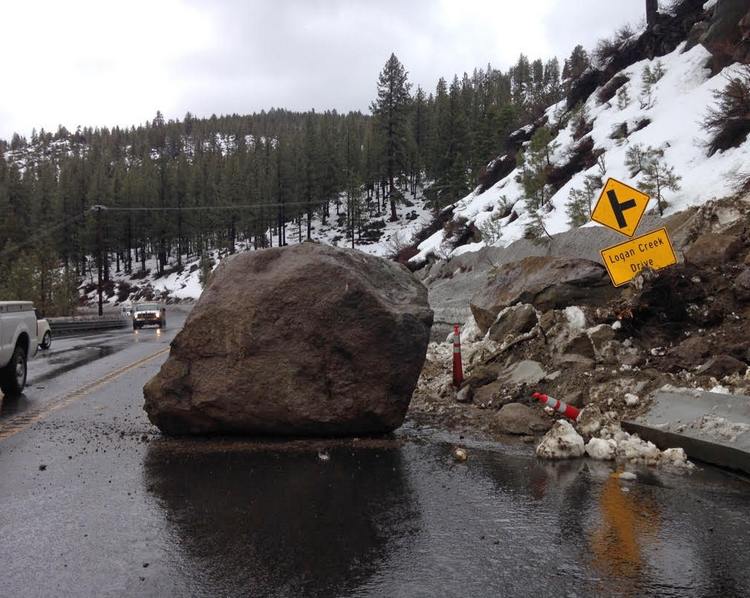
Highway 50 is having a rough winter on the Nevada side, too, where a bunch of vehicle-size boulders popped loose and crashed onto the road at Logan Creek, between Cave Rock and Glenbrook. The rocks were so big it required blasting them in half to remove them. Then when things seemed over, engineers found another giant that was loose higher up that not only threatened the road but also a house below on the lake shore. The closure of this road was disruptive to travelers and commuters going and coming from Reno and Carson City. People had two options: either go 395 south through Gardnerville and over State Route 207 (Kingsbury Grade), or go the ultimate Lake Tahoe scenic route around the whole lake by taking Hwy 28 at the top of Spooner Summit to Hwy 89 through Tahoe City and around Emerald Bay.


The future of Stateline at the South Shore lies with the US 50 South Shore Community Revitalization Project. The project has been in the making since 1980 and has made great strides with the construction of the Heavenly Village, the Gondola, and the Village and Raley’s shopping center. With all the new attractions to such a small area of town, which many consider to be downtown, the area has become congested, and a proposed rerouting of Hwy 50 has become almost a necessity. 50 would be rerouted around the casino corridor on the mountainside behind Mont Bleu, Harrah’s and the Heavenly Village and back to the existing highway at Pioneer Trail, approximately one mile long. Meanwhile, within the corridor and village area it would become more pedestrian friendly, with the road being narrowed and sidewalks widened. A central location for people visiting and locals has long been needed in this town to gather and enjoy themselves, and the Stateline area is an ideal place for development that can only benefit this bi-state community.
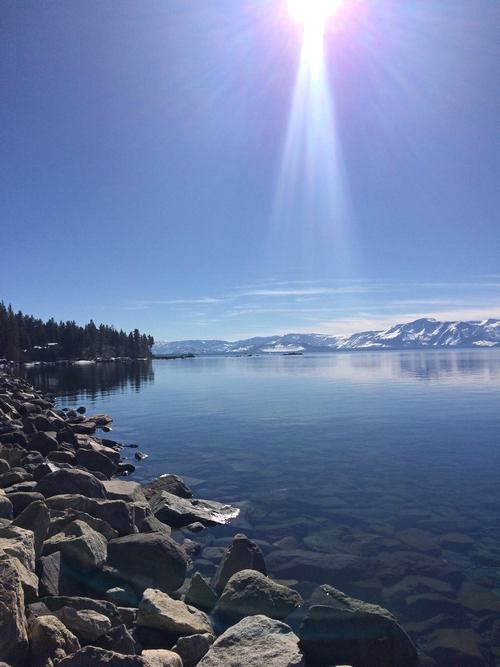
The ends justify the means, and with all the damage and disruption the snow and rain has brought to the interstate highway system, it will all be gravy in the summer. There has been so much water flowing into the lake, I think you can watch it rise right before your eyes. Estimates have been in the trillions of gallons over the last two months. Piers on the South Shore and by Cave Rock that were sitting on dry sand in the fall are now in three or four feet of water. It’s always better when the lake is at capacity — it just makes you feel good.
— Brendan Packer